
Travel Photography in New Orleans: Sunrise, Stories, and Sense of Place
Travel photography can be some of the most rewarding photography we create.
For many photographers, travel photography is the art of capturing the character of a place and the lives within it. I see it that way as well, but for me it is also something simpler. It is an opportunity to slow down, observe, and photograph what captures my attention without the pressure of a checklist or itinerary.
Whenever I know I will be visiting a particular city, I spend time studying the work of other photographers and artists before I arrive. I look at familiar viewpoints, iconic landmarks, hidden corners, and the ways others have interpreted the location. Then, once I am there with my own camera, I try to experience the place for myself and create photographs that reflect my own perspective.
At its best, travel photography does several things at once. It documents a place, interprets it through the photographer’s vision, inspires curiosity, and often encourages others to experience the destination for themselves.
Returning to a Familiar City with a Camera
Having visited the city for more than fifty years, I arrived with a sense of familiarity and anticipation. Some places become old friends over time. You know the streets, the landmarks, the sounds, and even the smells. Yet every visit presents something new.
I still remember standing along the riverfront during my earliest visits, watching ships move along the Mississippi and wondering where they were headed. Decades later, standing in nearly the same place with a camera in hand, I find myself looking at the city differently. The curiosity remains, but now it is expressed through photography.
For this trip, I wanted to capture some of the sense of place that has drawn me back over the years: the river, the architecture, the cafés, the streetcars, and the quiet moments that often exist just beyond the city’s most recognizable landmarks.
Sunrise Over the Mississippi
There is something special about beginning a day along the Mississippi River.
At sunrise, New Orleans feels different. The city has not fully awakened, the light is soft, and the river carries a quiet strength. Founded in 1718, New Orleans has grown from a French colonial settlement along the Mississippi River into one of America’s most distinctive cities, shaped by river commerce, architecture, music, food, culture, and generations of travelers drawn to its sense of place.
Photographing the river at dawn allowed me to begin the day with light rather than landmarks. Before the crowds arrived and the streets became busy, the scene was about reflections, colors, movement, and atmosphere.
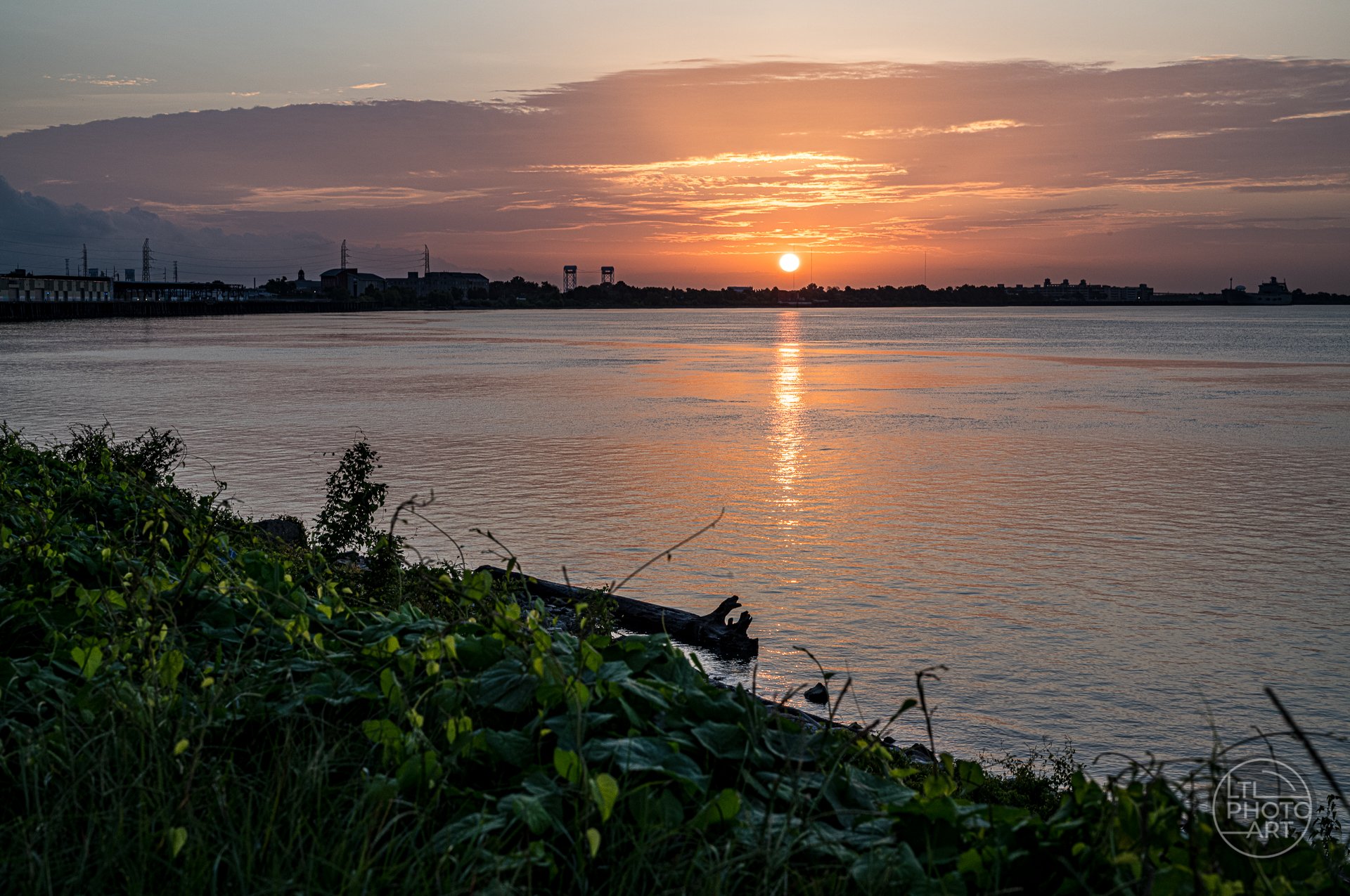
Morning light rises over the Mississippi River, illuminating the bend that has long shaped the identity and character of New Orleans.
Photography Tip: Some of the most beautiful light occurs before the sun reaches the horizon. Arriving early offered an opportunity to photograph the subtle color transitions and reflections that quickly disappear once daylight takes over.
For a travel photographer, these quiet moments often become the most meaningful images from an entire trip.
The Crescent City Connection
The Crescent City Connection is one of the defining structures spanning the Mississippi River in New Orleans. Its sweeping steel arches link the east and west banks and create a powerful visual relationship between the city and the river.
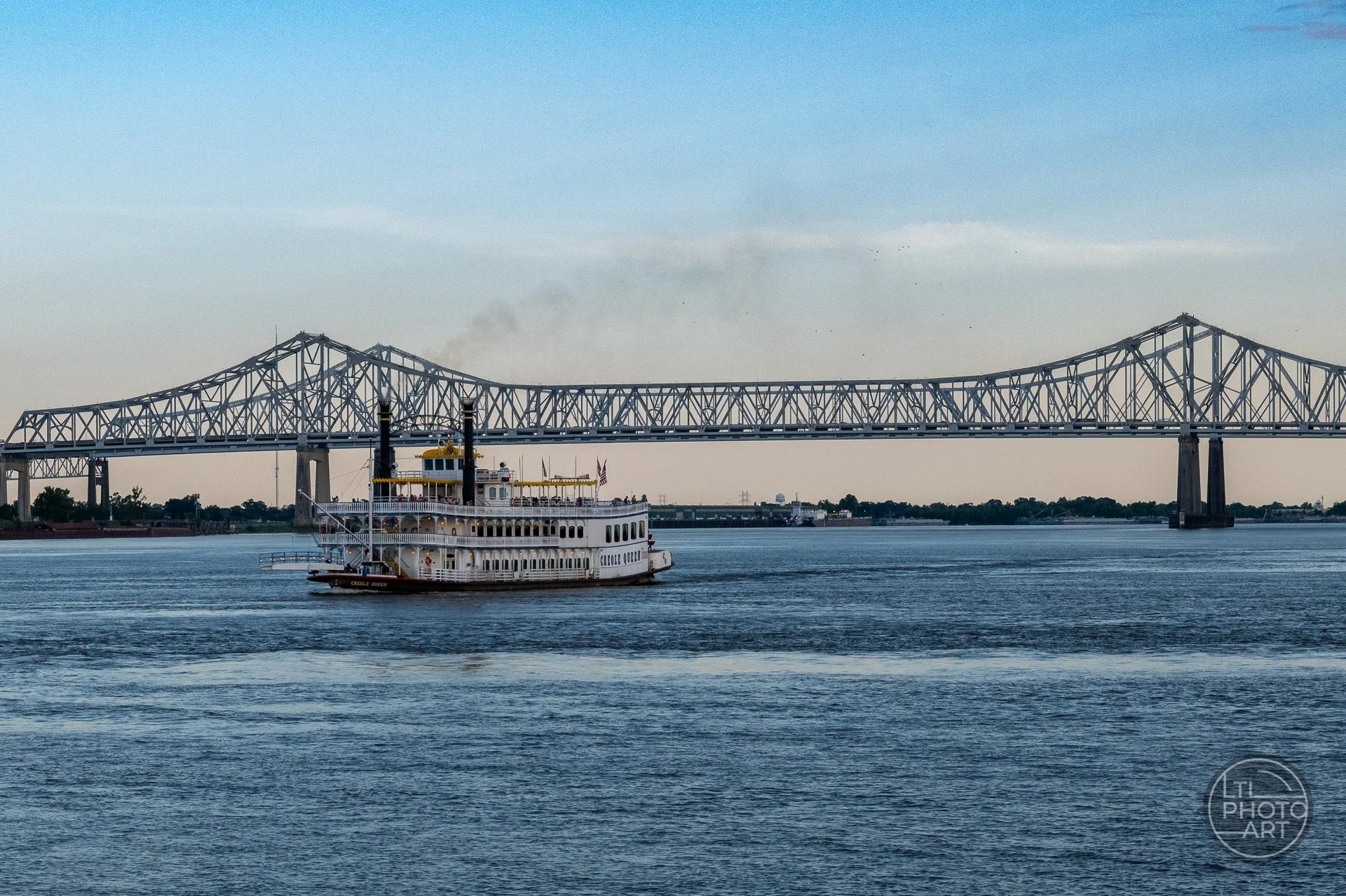
The Crescent City Connection frames river traffic on the Mississippi, showing the scale, movement, and character of New Orleans from the waterfront.
Photographically, bridges provide structure, scale, and direction. They guide the viewer’s eye and connect different elements within a scene.
In New Orleans, the Crescent City Connection is more than transportation infrastructure. It is part of the city’s visual identity. Whether viewed from beneath the bridge, along the riverfront, or against the morning sky, it adds geometry and strength to an environment otherwise defined by flowing water and changing light.
Jackson Square and St. Louis Cathedral
Few views are more closely associated with New Orleans than Jackson Square and St. Louis Cathedral.
The equestrian statue of Andrew Jackson, the open square, the surrounding architecture, and the cathedral’s three white spires create one of the most recognizable scenes in the city.
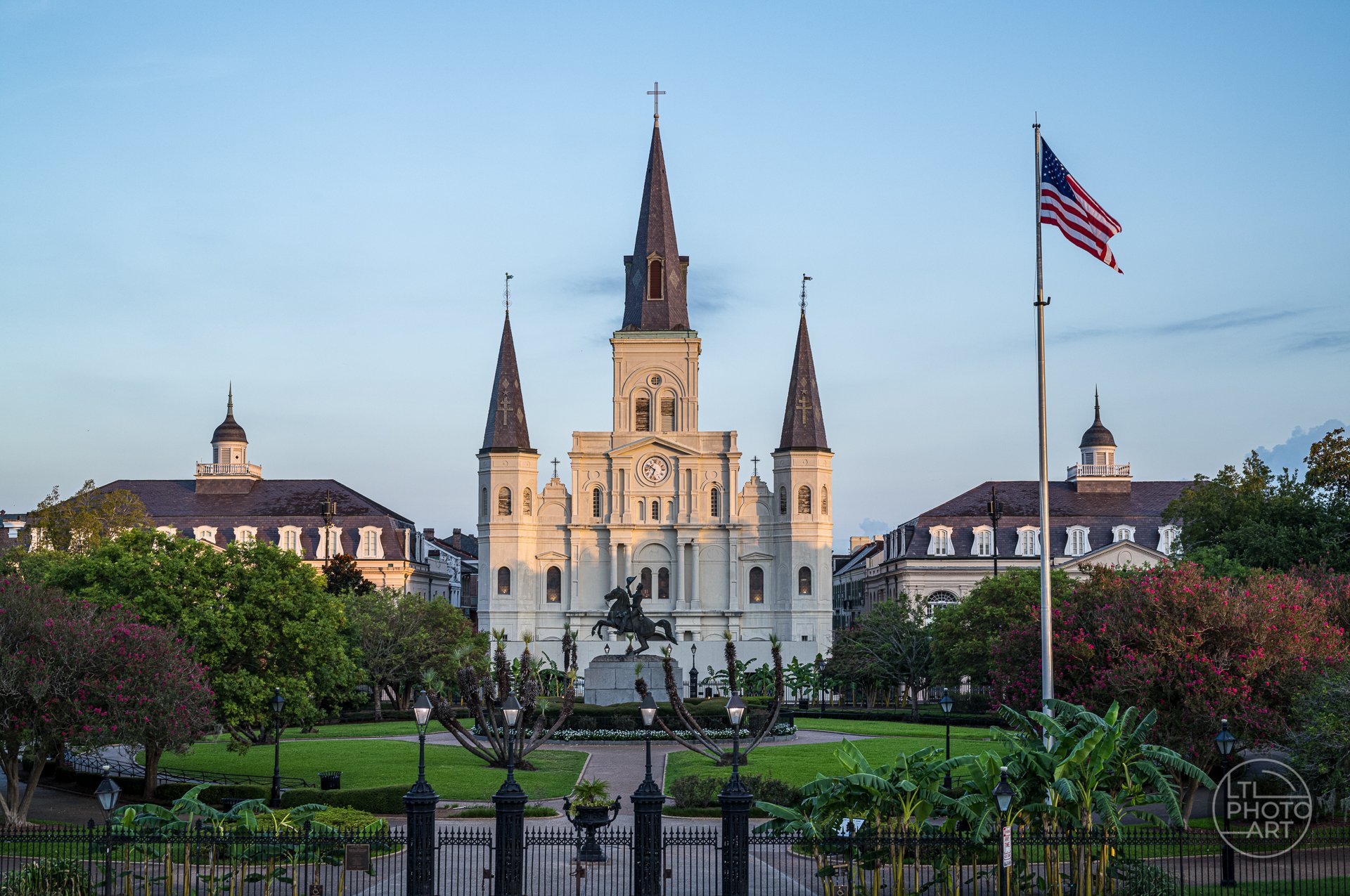
The view across Jackson Square toward St. Louis Cathedral captures one of the most recognizable scenes in New Orleans, where architecture, history, gardens, and morning light come together.
It is a location photographed countless times, which makes it even more challenging and rewarding to photograph.
The goal is not simply to recreate the postcard image. Instead, it is to notice what is unique about that particular morning. It may be the direction of the light, a passing pedestrian, a shadow falling across the square, or the mood created by the weather.
Photography Tip: Familiar subjects rarely become interesting because of the composition alone. They become interesting because of timing, light, and patiently waiting for something unexpected to enter the frame.
Even iconic locations can feel new when conditions change.
Café du Monde and the French Market
At the edge of the French Market, Café du Monde remains one of the most recognizable cafés in America.
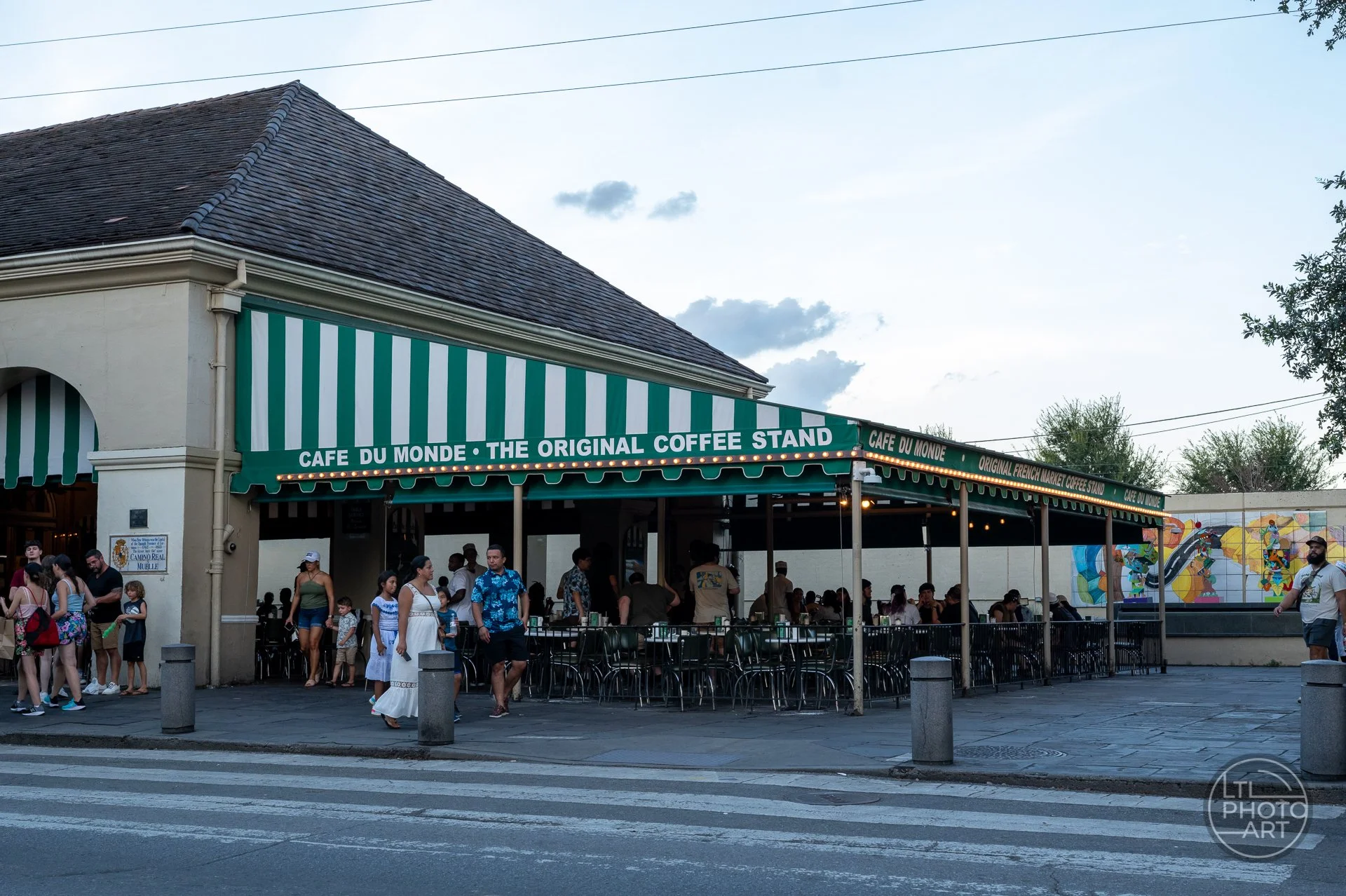
Café du Monde captures the energy and tradition of New Orleans, where coffee, beignets, visitors, and the French Market atmosphere come together.
The green-and-white awnings, the scent of fresh coffee, the powdered sugar drifting from beignets, and the constant movement of visitors all contribute to the atmosphere that makes the location so uniquely New Orleans.
Some places become photographic subjects because they are visually appealing. Others become subjects because they represent the culture of a place. Café du Monde is both.
It is the kind of location where travel photography becomes more than architecture or street photography. It becomes memory, tradition, and experience.
Lafitte’s Blacksmith Shop and the Texture of History
Lafitte’s Blacksmith Shop & Bar is one of those places where the age and texture of New Orleans become immediately apparent.
Its weathered exterior, dark interior, and historic presence create the feeling of stepping into another era.
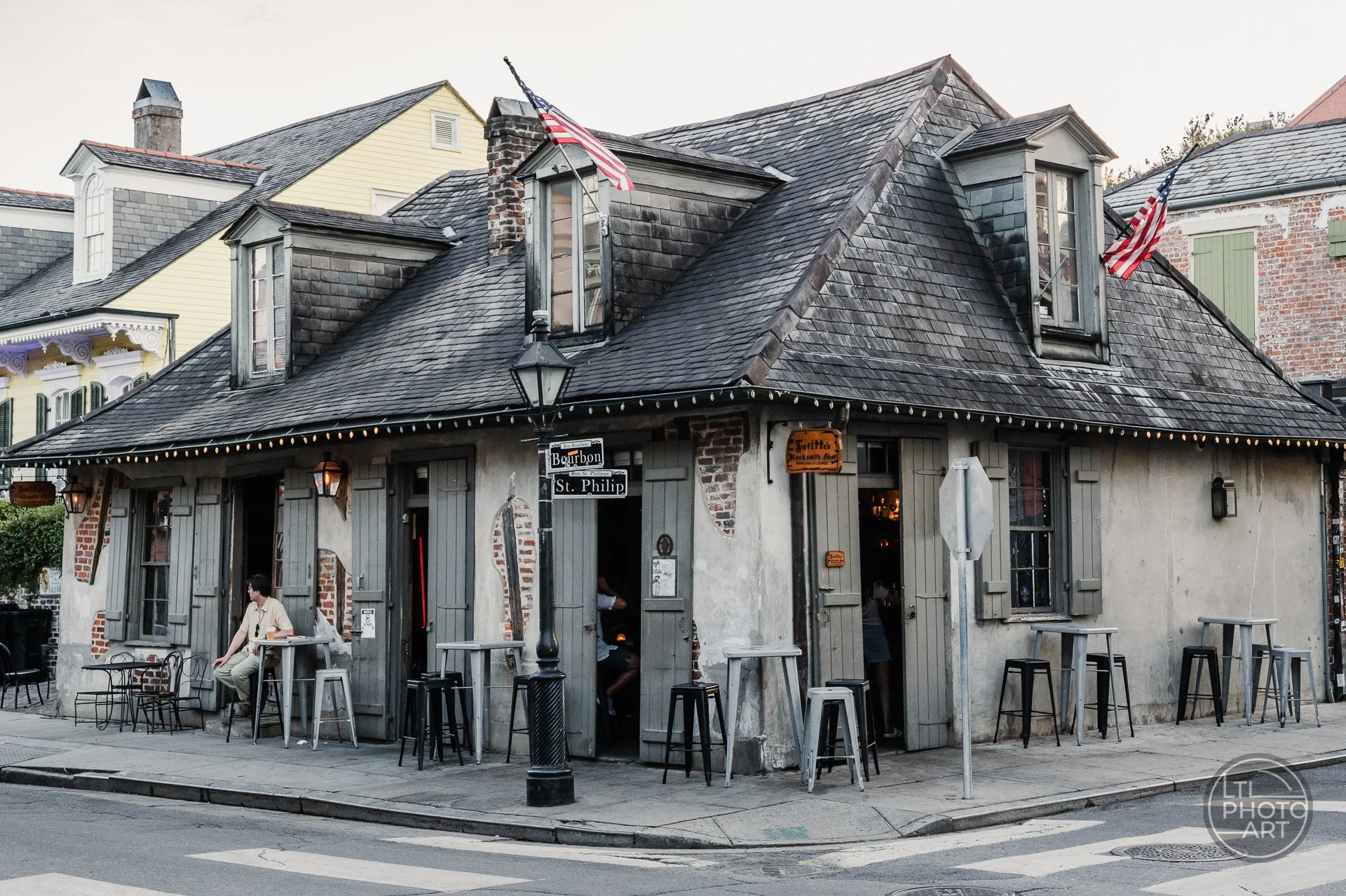
A person waits outside Lafitte’s Blacksmith Shop, adding a quiet human moment to the weathered texture and history of the French Quarter.
New Orleans is filled with places that seem to carry stories within their walls. As photographers, our challenge is not simply to document what a building looks like but to communicate what it feels like to stand in front of it.
The strongest travel photographs often leave room for the viewer’s imagination. They suggest a story beyond the edges of the frame.
Streetcars, Streets, and City Movement
New Orleans is a city in motion.
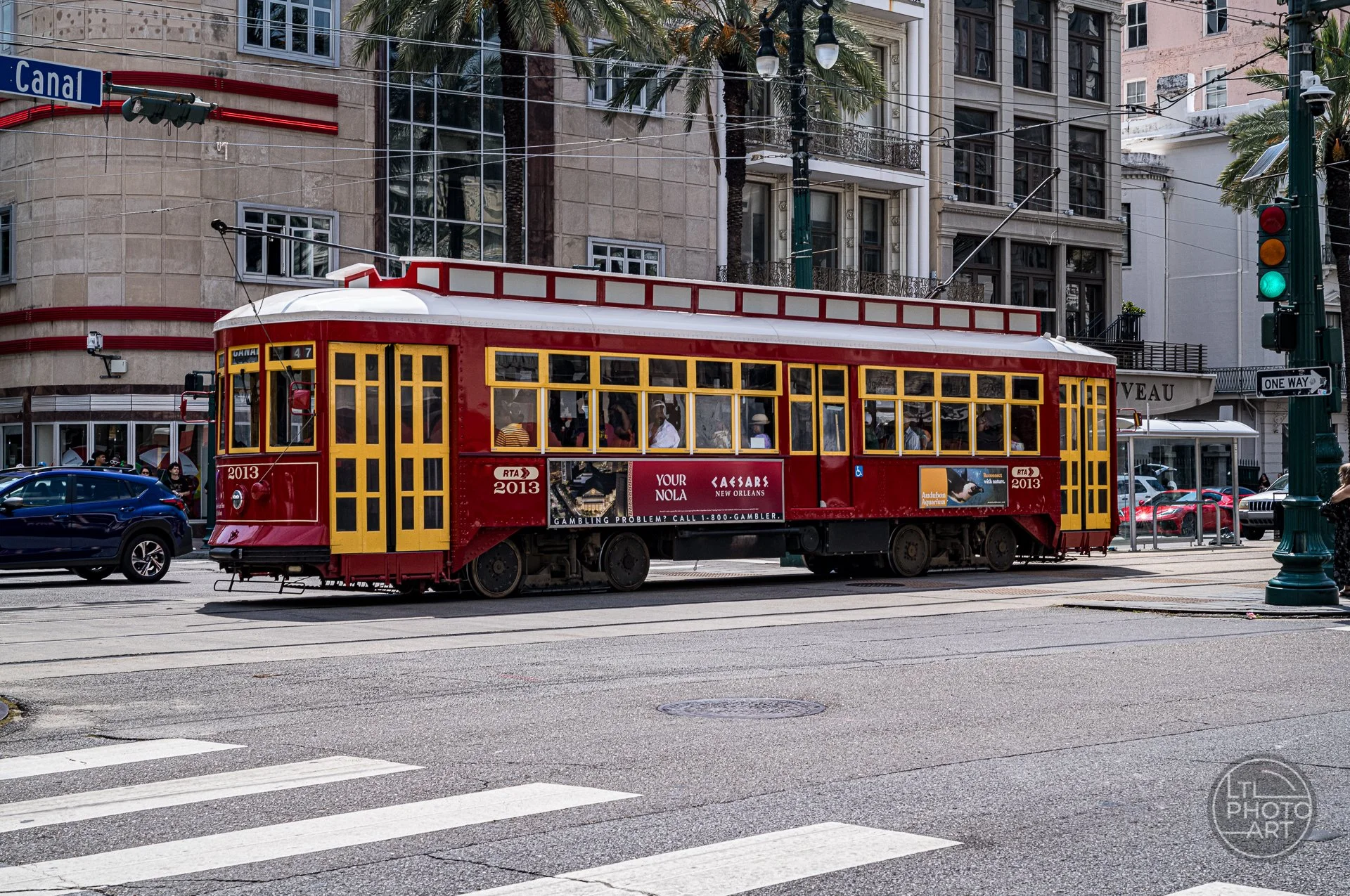
The Canal Streetcar brings movement and character to the streets of New Orleans, connecting the city’s history with its everyday pace.
Streetcars, pedestrians, trains, river traffic, musicians, and visitors all contribute to the rhythm of daily life. A walk along Bourbon Street, a stop in front of Galatoire’s, or the passing of a Canal Street streetcar reveals a different side of the city than the quiet sunrise scenes along the river.
These may not always be the grand scenic photographs, but they are often the images that help complete the story.
They show how people interact with a place and how a city expresses its identity throughout the day.
City Park and the Quiet Side of New Orleans
City Park offers an entirely different photographic experience.
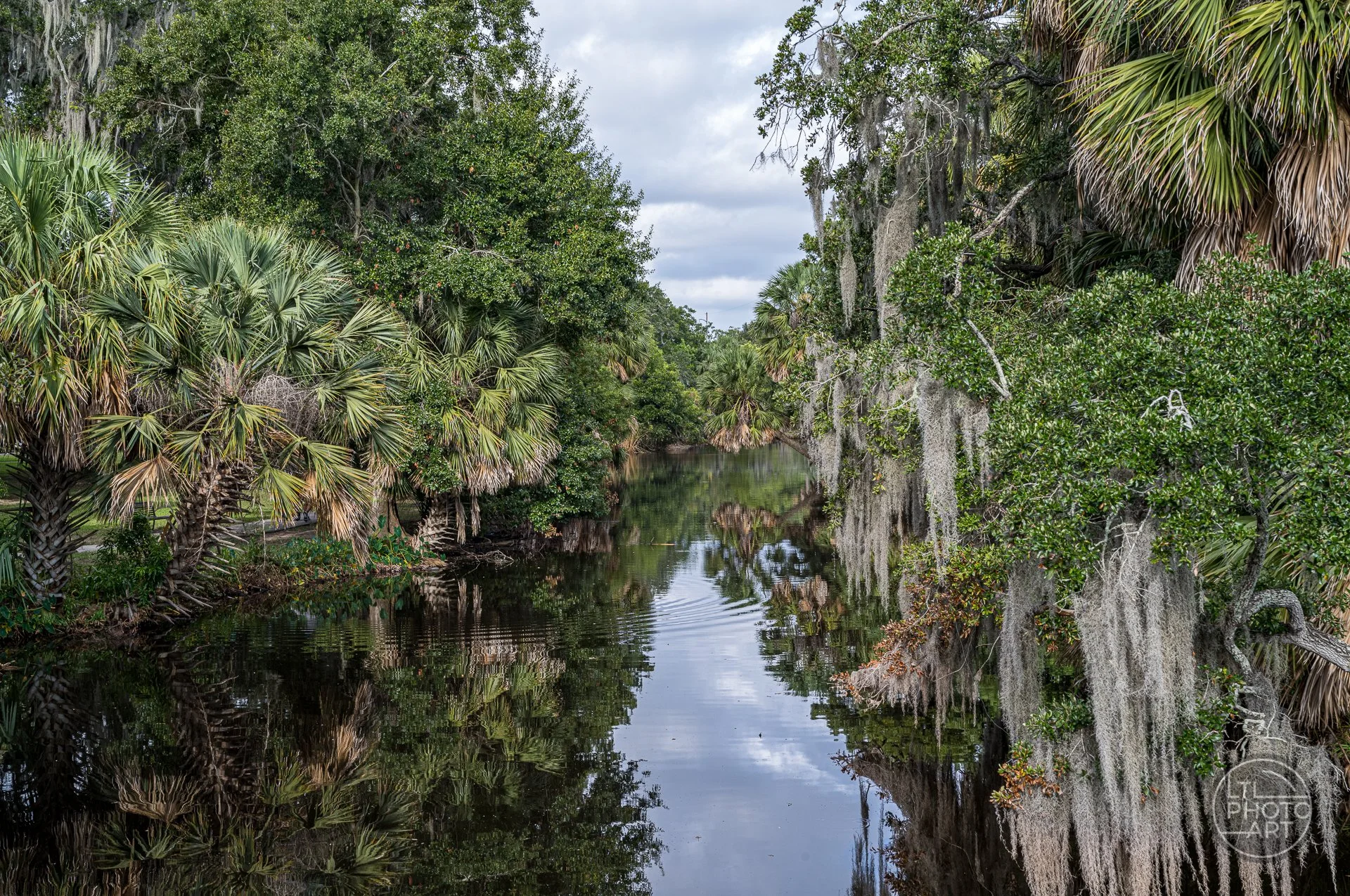
City Park offers a quieter view of New Orleans, where water, trees, reflections, and Spanish moss create a peaceful contrast to the energy of the French Quarter.
Away from the energy of the French Quarter, the park provides space, trees, water, and a slower pace.
Here, the camera begins to notice different things: reflections on still water, filtered light through ancient oaks, winding pathways, and subtle details that might otherwise be overlooked.
Including City Park in a photographic exploration of New Orleans reminds us that the city is more than its famous landmarks. Some of the most rewarding photographs come from stepping away from the obvious and allowing a place to reveal itself at its own pace.
Metairie Cemetery and The Cities of the Dead
Above-ground tombs are among the most recognizable visual elements of New Orleans. Often referred to as “Cities of the Dead,” these cemeteries blend history, architecture, culture, and remembrance.
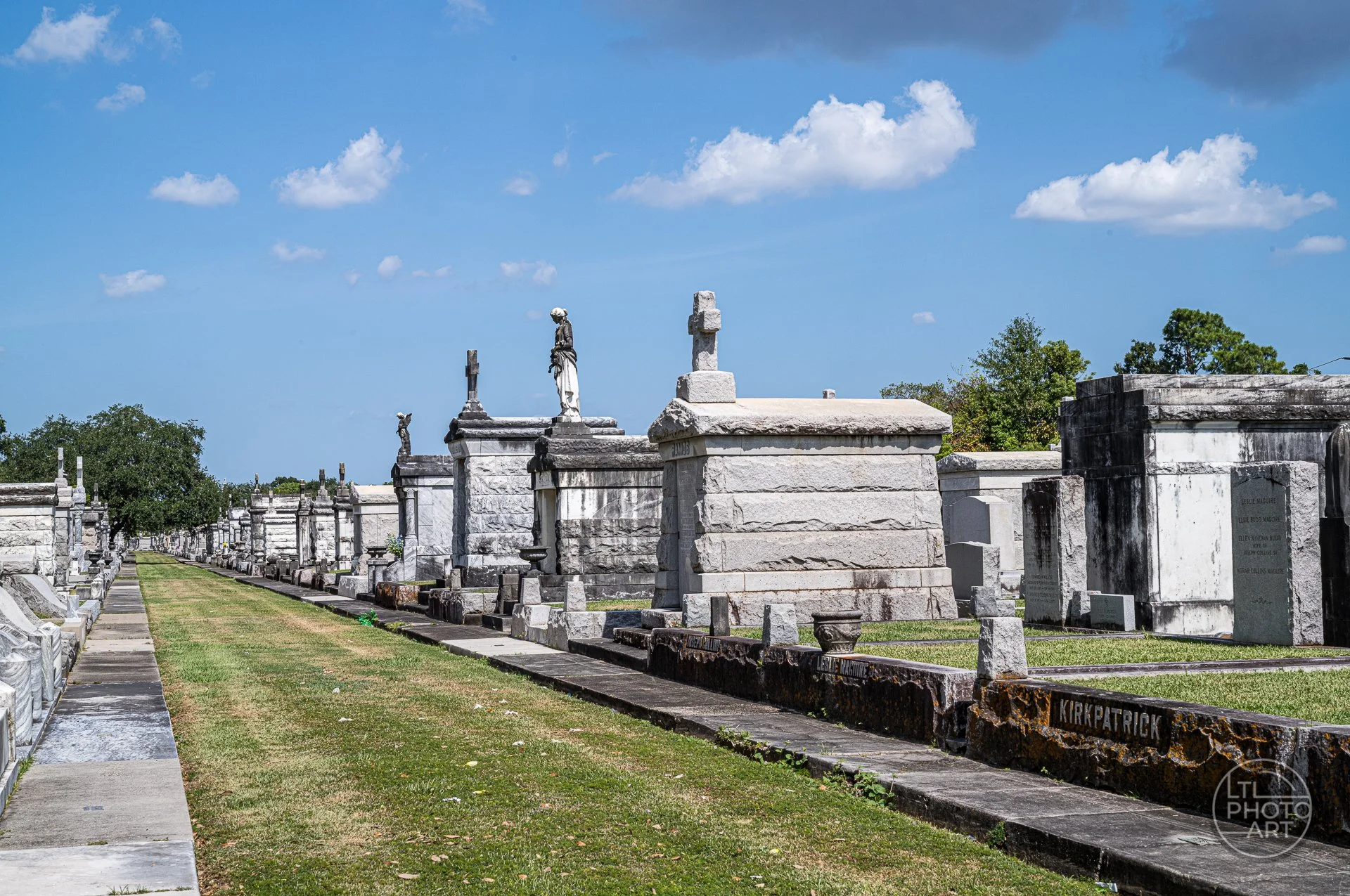
Metairie Cemetery offers a quieter side of New Orleans, where above-ground tombs, statues, and long rows of stone monuments create a reflective sense of place.
While visitors often gravitate toward the city’s more famous historic cemeteries, Metairie Cemetery has always held a particular fascination for me.
Metairie Cemetery was established in 1872 on the former grounds of the Metairie Race Course, a once-prominent horse-racing track that opened in 1838 on Metairie Ridge. The setting combines an unusual history with remarkable architectural beauty. Wide avenues, elaborate monuments, and mature oak trees create an atmosphere that feels both elegant and contemplative.
Unlike many locations in New Orleans, the experience here is quiet. The pace slows. Details become more important.
Photographing a cemetery requires patience and respect. The resulting images may be understated, but they often carry a depth of atmosphere that lingers long after the photograph is made.
Photography Tip: Cemeteries reward careful observation. Some of the strongest images are found not in the largest monuments but in the details of light, texture, and design.
Photography Tips for Visiting New Orleans
If New Orleans is on your photography travel list, consider these approaches:
Arrive at the Mississippi River before sunrise.
Visit Jackson Square early in the morning before crowds arrive.
Photograph Canal Street streetcars from multiple perspectives.
Explore City Park for quieter landscape and reflection images.
Spend time photographing details, not just landmarks.
Visit cemeteries respectfully and pay attention to texture, light, and architectural design.
Leave time for wandering. Some of the best images happen when you are not looking for them.
Final Thoughts
Travel photography is not simply about visiting a destination and photographing its most recognizable landmarks. It is about slowing down long enough to notice what still captures your attention. In New Orleans, that might be sunrise over the Mississippi, the sweeping lines of the Crescent City Connection, the familiar view of Jackson Square, the activity surrounding Café du Monde, the texture of historic buildings, the rhythm of streetcars, or the quiet atmosphere of City Park and Metairie Cemetery.
For me, photographing New Orleans is personal. After more than fifty years of visits, the city remains familiar. Yet it still surprises me. Every visit reveals a new detail, a different light, a fresh perspective, or a photograph I had not seen before.
That, perhaps, is one of the greatest gifts of travel photography.
A familiar place can still offer a new photograph. You simply have to slow down, observe, and be ready when the light arrives.