
Five Photography Lessons New Orleans Taught Me
New Orleans is one of those places where it is easy to arrive with a list of photographs already in mind. The French Quarter, St. Louis Cathedral, the Mississippi River, streetcars, historic architecture, and cemeteries all seem to demand attention.
But some of my favorite photographs from New Orleans came when I stopped thinking about what I was supposed to photograph and began paying closer attention to what was happening around me.
Photography in New Orleans reinforced several lessons that apply far beyond this city. They are lessons about slowing down, observing light, looking beyond the obvious, and allowing a place to reveal itself rather than simply checking photographs off a list.
Slow Down and Observe
New Orleans rewards photographers who are willing to slow down.
There is so much visual information competing for your attention that it can be tempting to keep moving from one recognizable location to another. But when I stopped walking and spent more time observing a scene, smaller details began to emerge.
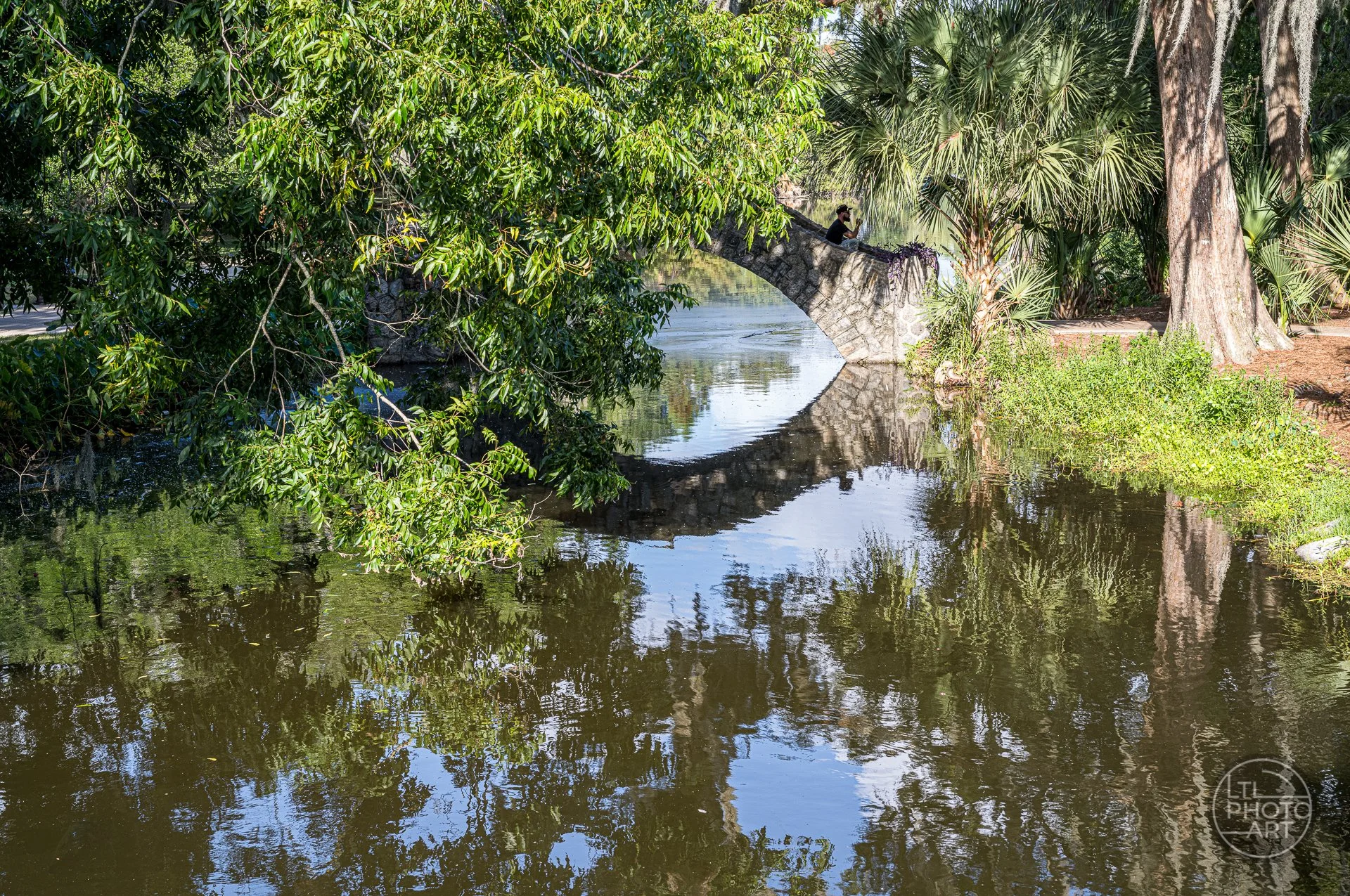
A quiet moment in City Park—a reminder that slowing down often reveals photographs that are easy to miss.
In City Park, I noticed a person sitting quietly on a stone bridge above the water. It was not a dramatic moment, but the stillness of the scene, the surrounding trees, and the reflections below gave it a sense of calm that made me stop and look more carefully. It became a photograph because I was willing to stay with the scene rather than continue searching for something more obvious.
That same approach carried into other parts of New Orleans. Reflections changed as the light moved. People entered and left a composition. Architectural details that initially blended into the surroundings became subjects of their own. Along the riverfront, boats, bridges, workers, and changing activity created photographs that would have been easy to overlook if I had simply continued walking.
This is one of the reasons I enjoy travel photography. The camera gives me a reason to slow down and become more aware of my surroundings.
Sometimes the photograph is not immediately obvious. You have to give the scene enough time to reveal it.
Look Beyond the Obvious Landmarks
Iconic locations are iconic for a reason, and I enjoy photographing them. But they should be a starting point rather than the entire photographic experience.
New Orleans has no shortage of recognizable subjects. The French Quarter, Jackson Square, St. Louis Cathedral, the Crescent City Connection, and the Mississippi River immediately establish a sense of place.
The challenge is finding a photograph beyond the one everyone else sees.
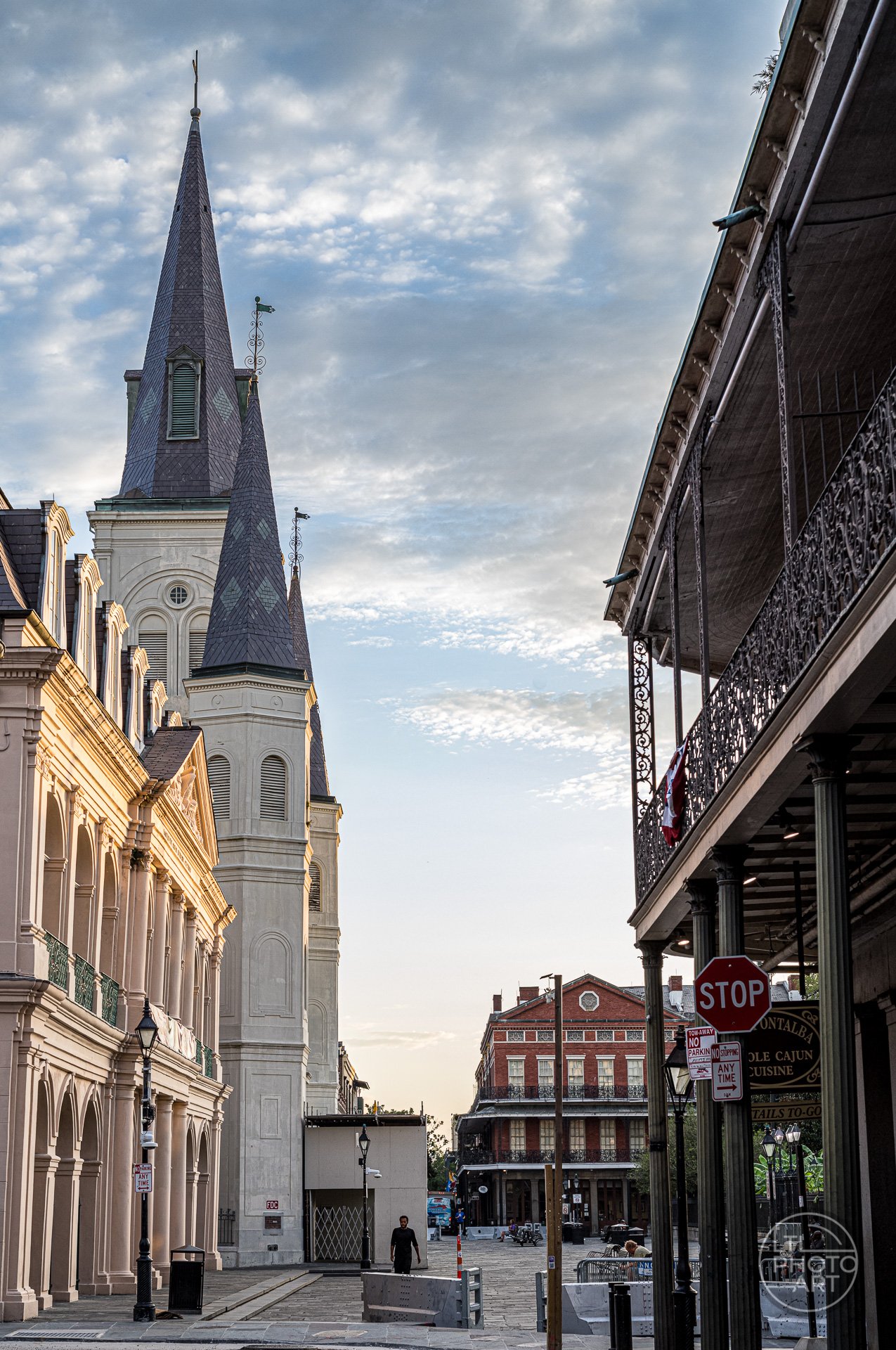
The Cabildo and St. Louis Cathedral from a less familiar viewpoint, using the surrounding street and architecture to create a stronger sense of place.
Rather than photographing St. Louis Cathedral from the familiar view across Jackson Square, I found a narrower perspective along Chartres Street. From this angle, the cathedral and The Cabildo emerge between the surrounding buildings, with the street itself becoming part of the composition. The familiar landmarks are still recognizable, but the viewpoint creates a different sense of depth and place.
Looking beyond the obvious does not always mean turning away from a landmark. Sometimes it simply means changing your position, exploring another street, or including more of the environment around the subject.
It might also mean isolating an architectural detail, looking for reflections, incorporating people into the scene, or exploring quieter locations away from the busiest areas.
City Park was another reminder of this. Away from the energy of the French Quarter, the landscape offered an entirely different version of New Orleans, one defined by water, trees, reflections, and a slower rhythm.
A successful travel collection does not need every photograph to announce the location immediately. Sometimes a familiar subject seen differently, or a quieter scene entirely, helps complete the story of a place.
Light Transforms Familiar Scenes
The subject may remain the same, but the photograph can change completely as the light changes.
One morning, I was standing across the street from one of the most familiar viewpoints for photographing St. Louis Cathedral, waiting for the morning light. As I looked around, I noticed that the light was beginning to strike the Pontalba Buildings along Jackson Square.
Those historic buildings, among the oldest apartment buildings in the United States, took on a different character in the warm light. The upper brick façade and windows began to glow while the lower floors remained in shadow, bringing out the color, texture, and architectural detail in a way that immediately caught my attention.
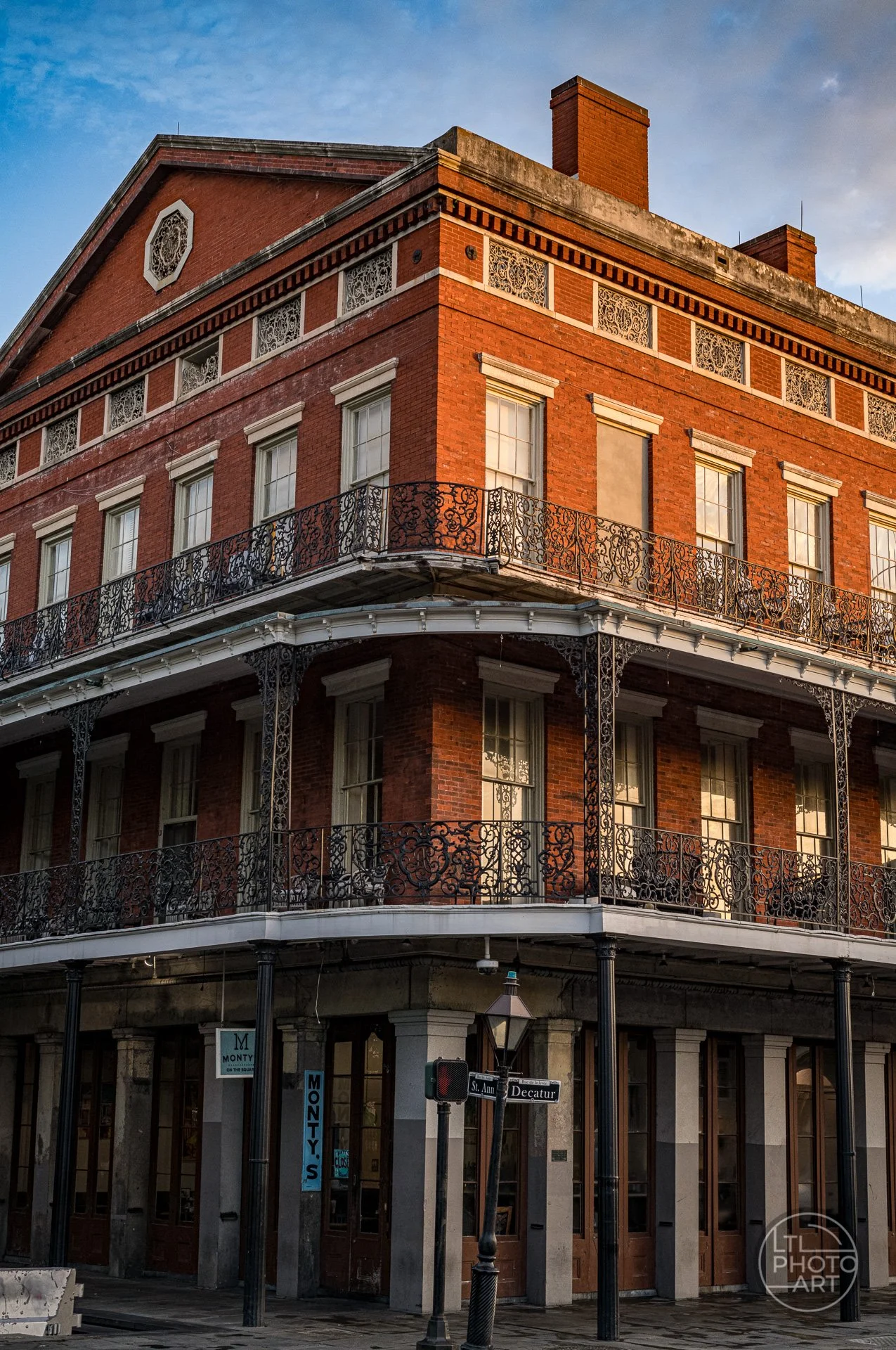
Warm morning light transforms the Pontalba Buildings, drawing attention away from the expected subject and revealing color, texture, and architectural detail.
The moment was a good reminder that sometimes the strongest photograph is not the one you came to make.
The same lesson became apparent along the Mississippi River. Early in the day, softer light created subtle colors and quieter scenes along the riverfront. As the sun moved higher, stronger contrast emphasized structures, bridges, boats, and activity on the water. Later light created another set of possibilities entirely.
A familiar subject does not necessarily produce a familiar photograph.
Returning to a location at a different time of day or simply staying long enough for the light to change, can reveal compositions that were not available earlier.
Photography is often described as photographing a subject, but in many ways we are photographing light.
New Orleans reminded me how dramatically light can change the mood and character of even the most recognizable scene.
People Create the Story
Architecture and landscapes can establish where a photograph was taken. People often explain what it felt like to be there.
Someone walking through the French Quarter, a worker along the Mississippi, a person sitting quietly in a park, or an unexpected interaction on the street can add scale, movement, curiosity, and narrative to an otherwise static composition.
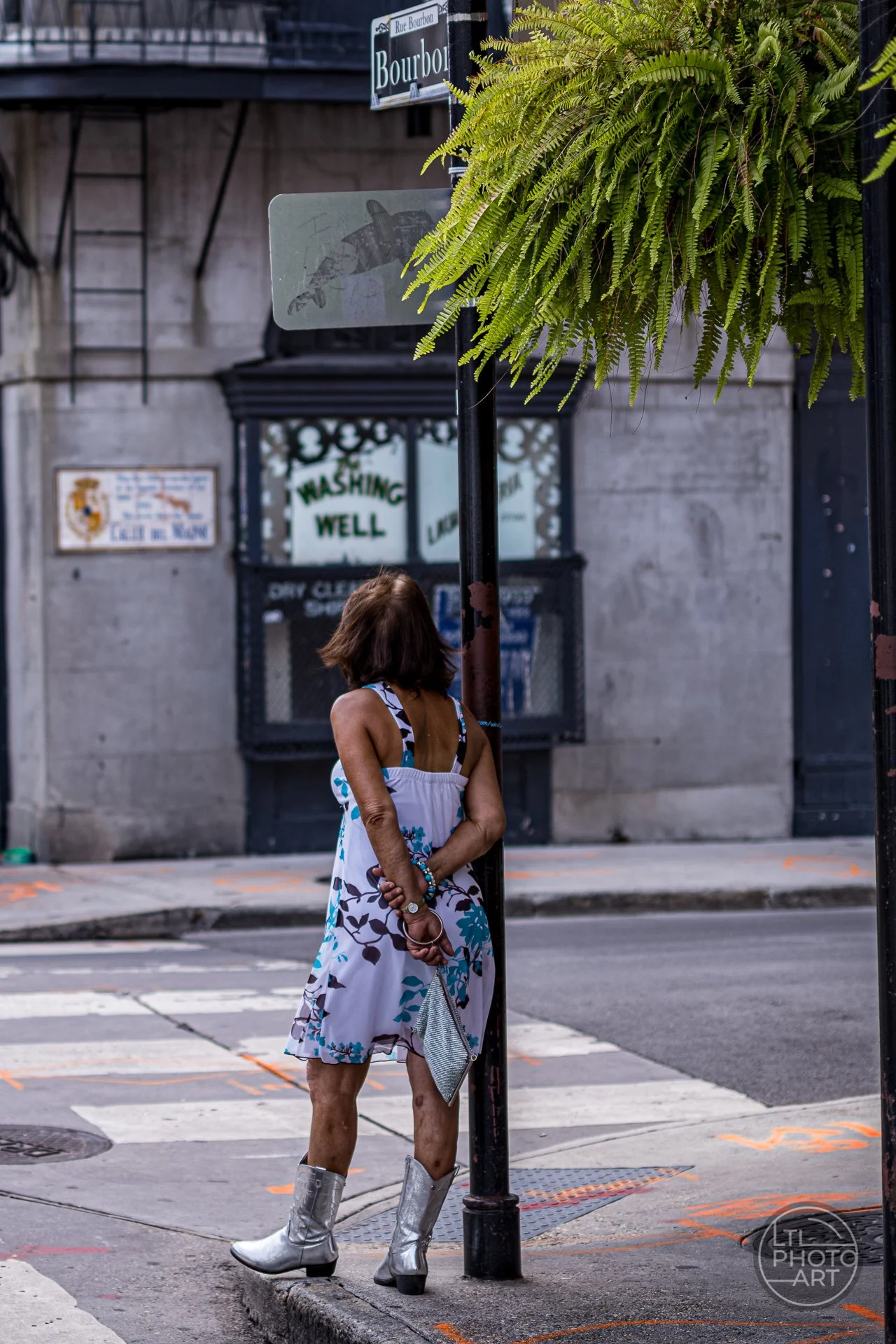
Waiting on Bourbon—a simple street moment where posture, place, and unanswered questions create the story.
In this photograph, a woman stands beneath a Bourbon Street sign, seemingly waiting or watching something beyond the frame. Her posture caught my attention, but what makes the photograph interesting to me is that I do not know exactly what she was waiting for, or what happened next.
That uncertainty is part of the story.
I do not necessarily need a person to dominate the frame. Often, a small human element is enough. It can give the viewer a place to enter the photograph and create questions:
Where are they going?
What are they doing?
What happened just before this moment?
What happens next?
These questions are part of what makes street and travel photography interesting to me. The photograph becomes more than a record of a location. It becomes a moment within a larger story.
Return Visits Reveal Deeper Photographs
There is a significant difference between seeing a place for the first time and photographing a place you are beginning to understand.
On an initial visit, recognizable subjects naturally attract attention. You are learning about the streets, figuring out where the light falls, discovering viewpoints, and understanding how people move through a location.
On subsequent visits, some of that uncertainty disappears.
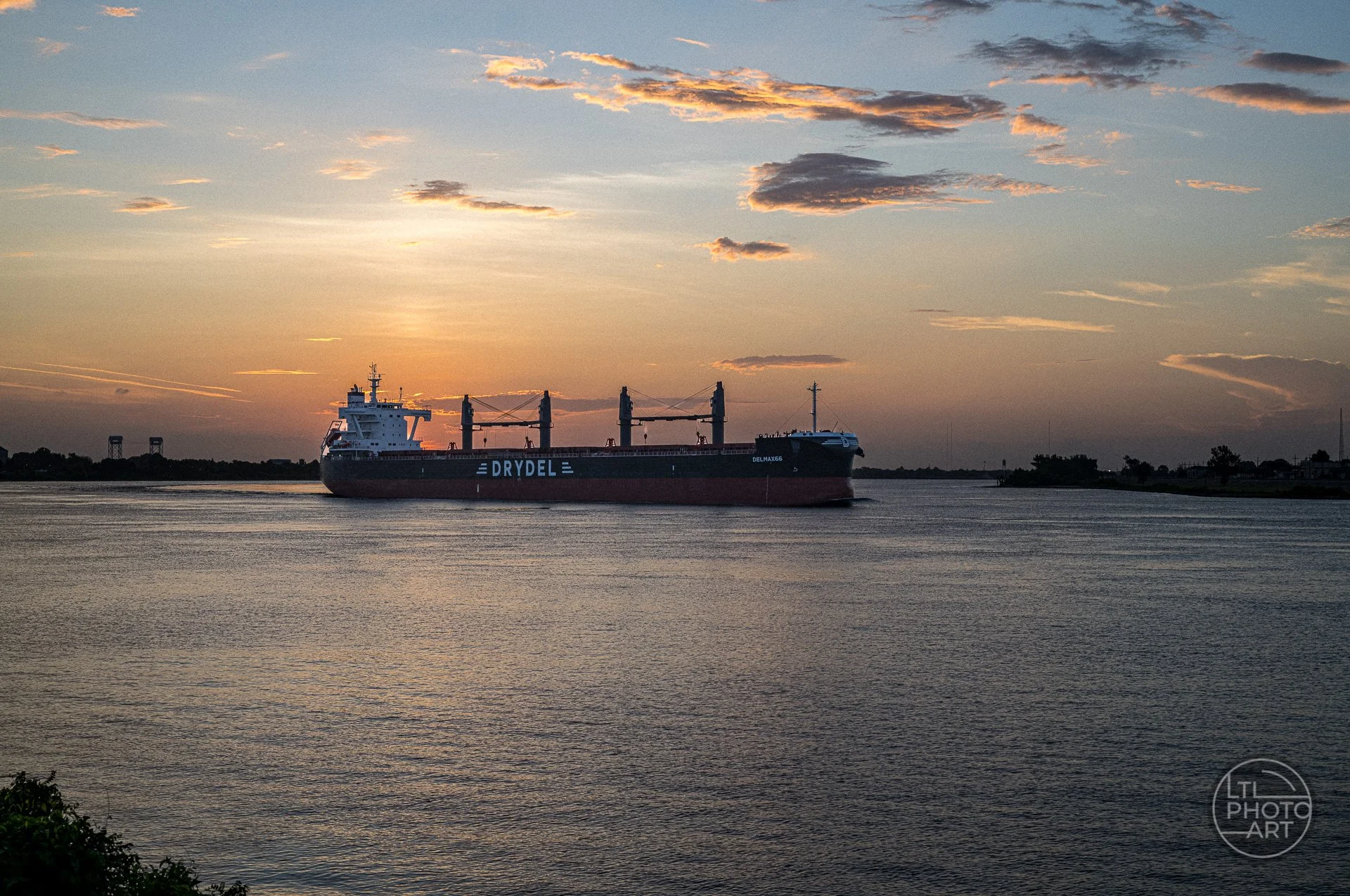
Repeated visits to the Mississippi River shifted my attention from familiar landmarks to the changing light, river traffic, and working character of the waterway.
I have photographed the Mississippi River, the Crescent City Connection, and sunrise in New Orleans many times. With each return, I became less focused on simply photographing the familiar view and more aware of the changing activity on the river itself. On this morning, a large cargo ship moving through the sunrise became the photograph.
Gradually, you begin looking beyond the obvious.
You remember where the morning light worked well. You recognize a location that deserves more time. You may return to a composition that almost worked before and approach it differently.
Familiarity does not make a location less interesting. In many ways, it makes it more interesting because the pressure to photograph the obvious disappears. Once you have captured the postcard view, you become free to explore the details, patterns, and moments that first-time visitors may never notice.
More importantly, familiarity creates room for curiosity.
Instead of asking, What should I photograph in New Orleans? the question gradually becomes, What have I not noticed yet?
That is a much more interesting question.
Photography as a Way of Experiencing a Place
The photographs I brought home from New Orleans include recognizable landmarks, riverfront scenes, architecture, landscapes, people, and quieter moments. Together, they tell a more complete story than any single iconic photograph could.
That may be the most important lesson New Orleans reinforced for me.
Photography often changes the way I experience a place. Without a camera, it would be easy to walk past details, rush between destinations, and remember only the major attractions. Carrying a camera encourages me to slow down, observe more carefully, and engage with a location on a deeper level. The photographs become a record of that experience, but the experience itself is ultimately the greater reward.
Travel photography is not simply about documenting where you went. It is about learning to experience a place more carefully—to notice how the light changes, how people move through a scene, how a familiar subject can look different from another viewpoint, and how repeated visits reveal details you may have missed the first time.
Slow down.
Look beyond the obvious.
Watch the light.
Notice the people and small moments happening around you.
And when possible, return.
The more time you give a place, the more it tends to reveal.
There is almost always another photograph waiting to be discovered.