
Scouting the Coast: Preparing for the Laguna Beach Photography Workshop
Before leading a photography workshop, I like to spend time walking each location with fresh eyes. The goal is not simply to find beautiful scenes. It is to understand how the landscape, light, tide, and timing come together so participants can spend their time shooting and learning rather than searching for subjects.
With the Laguna Beach Coastal Photography Workshop approaching on September 12–13, 2026, I recently spent another day exploring the Heisler Park coastline, revisiting familiar locations, studying conditions, and looking for teaching opportunities that will help participants get the most from their time in the field.
I came home with more than 200 photographs. Some were broad coastal vistas, but much of the day was spent concentrating on smaller details: breaking waves, splashes, rock textures, foreground elements, and the subtle changes that can completely transform a composition.
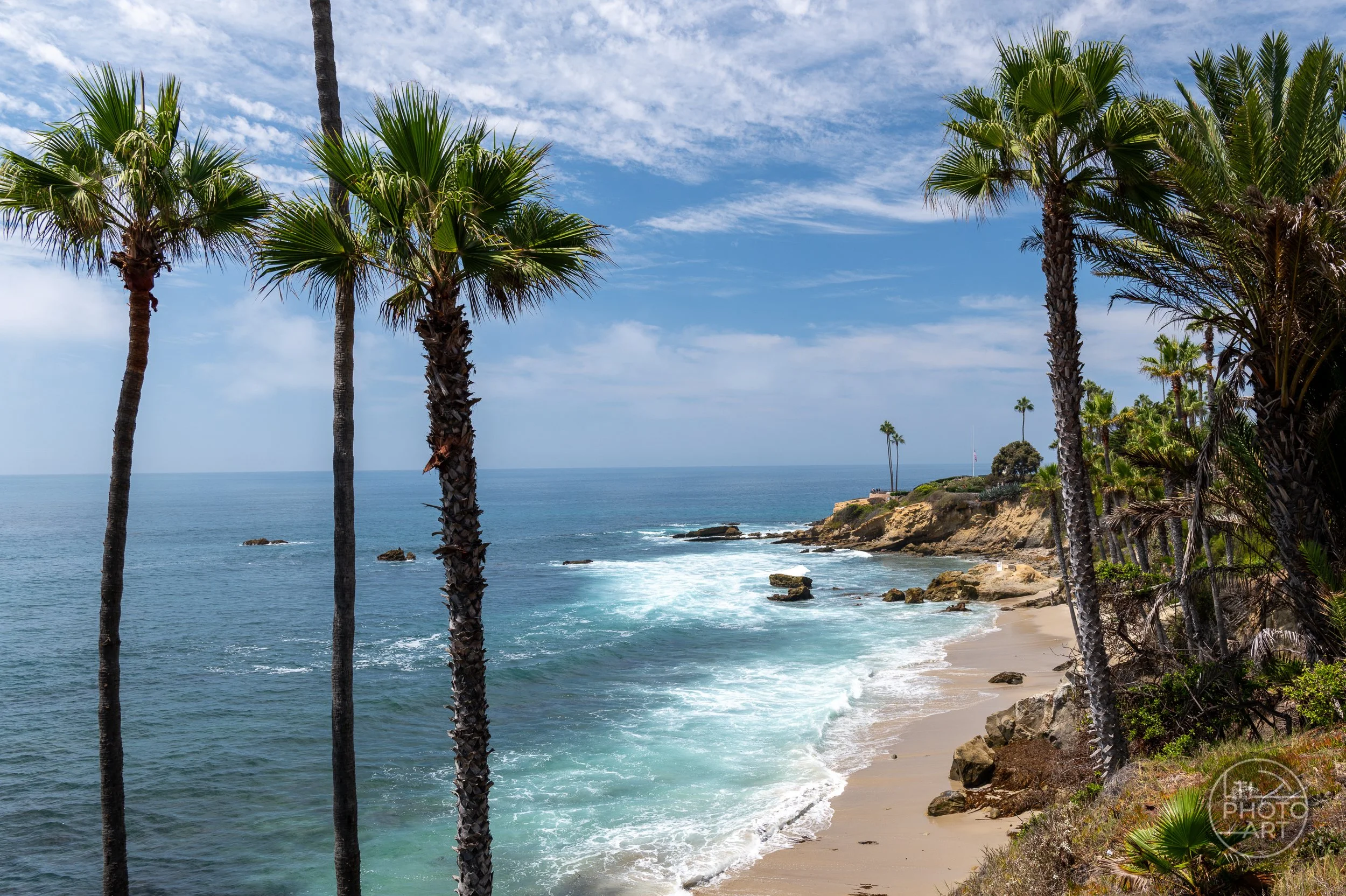
A palm-framed view from the Heisler Park walkway looking north across Rockpile Beach toward Monument Point along the Laguna Beach coastline.
Scouting the Locations
Heisler Park offers an unusually varied stretch of coastline within a relatively compact area. From the elevated walkway, photographers can work with broad views of the Pacific, beaches, rock formations, palms, and coastal bluffs. A short walk or stairway can then completely change the perspective by bringing you down to sea level.
During this scouting trip, I revisited Rockpile Beach, Monument Point, and several tide pool areas, paying particular attention to access, viewpoints, wave activity, and how the shoreline might photograph under different conditions.
Scouting also helps identify where participants can safely spend time working a scene rather than simply moving from one viewpoint to another. The goal is to know the location well enough that we can spend our workshop time concentrating on photography rather than searching for where to shoot.
One of the things I enjoy most about Laguna Beach is that no two visits are ever quite the same. Changing tides, shifting clouds, and the constant rhythm of the Pacific ensure that familiar locations often present entirely new photographic opportunities. That unpredictability is part of what makes coastal photography so rewarding.
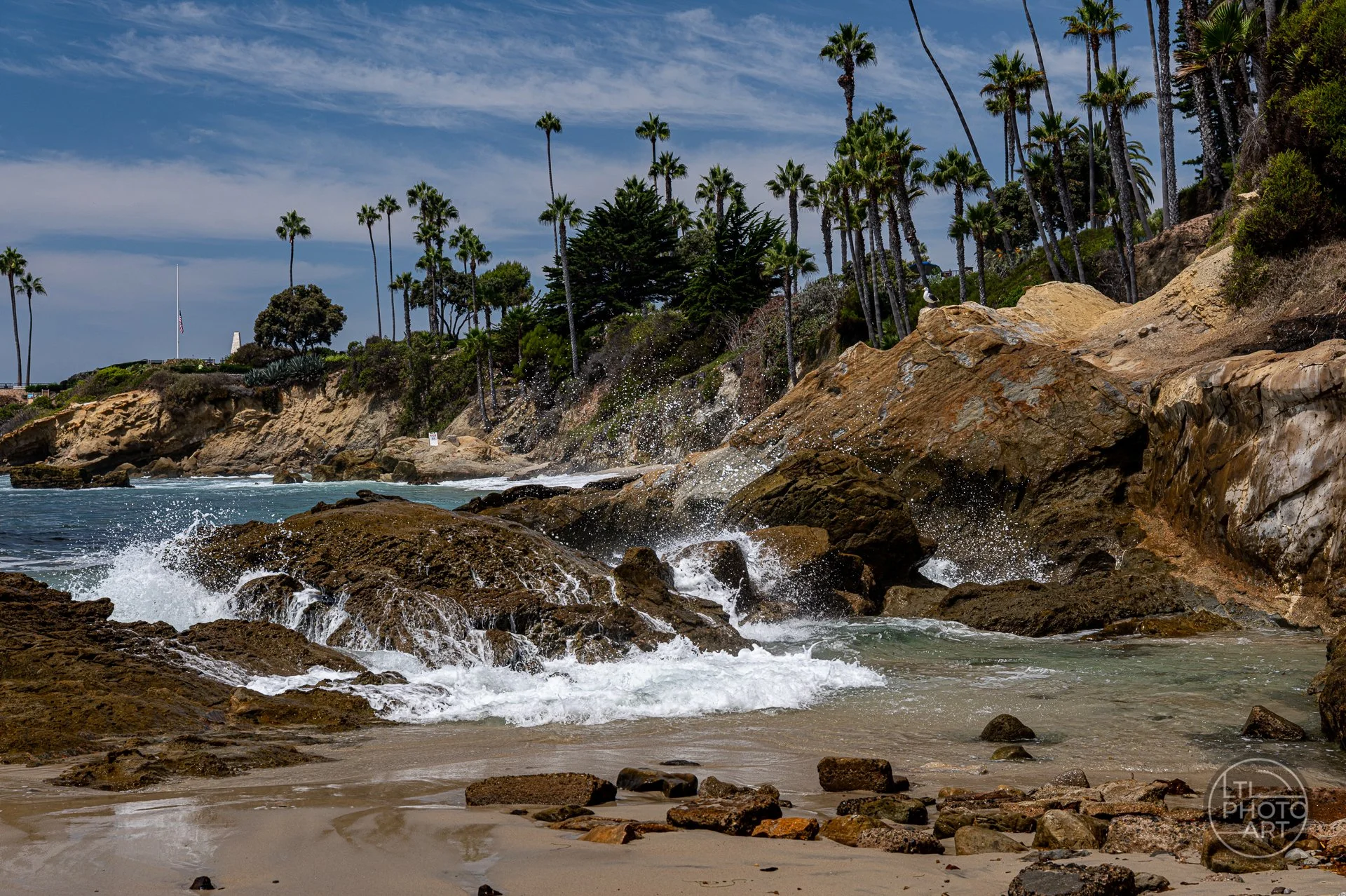
A gull overlooks the tide pools and breaking surf at the south end of Rockpile Beach beneath the palm-lined bluffs of Heisler Park.
Looking Beyond the Obvious Composition
One of the easiest things to do at a beautiful location is to make the obvious photograph and move on.
A wide coastal scene may immediately catch your attention, but there are usually many other photographs within that same view. Moving a few feet, changing camera height, isolating a smaller section of the shoreline, or incorporating a foreground element can produce an entirely different image.
During this scouting session, I deliberately moved between elevated views and sea-level compositions. From above, the coastline becomes a series of curves, layers, and patterns. At sea level, rocks that appeared relatively insignificant from the walkway suddenly become dominant foreground elements. The same stretch of coastline can become an entirely different photograph simply by changing position.
This is an important part of what we will practice during the workshop: slowing down, studying the scene, and asking what else might be there before moving on.
Too often, photographers make the first composition they see and then head to the next location. Some of my favorite photographs are discovered only after spending additional time exploring alternative viewpoints, waiting for changing light, or recognizing a detail that was easy to overlook at first glance.
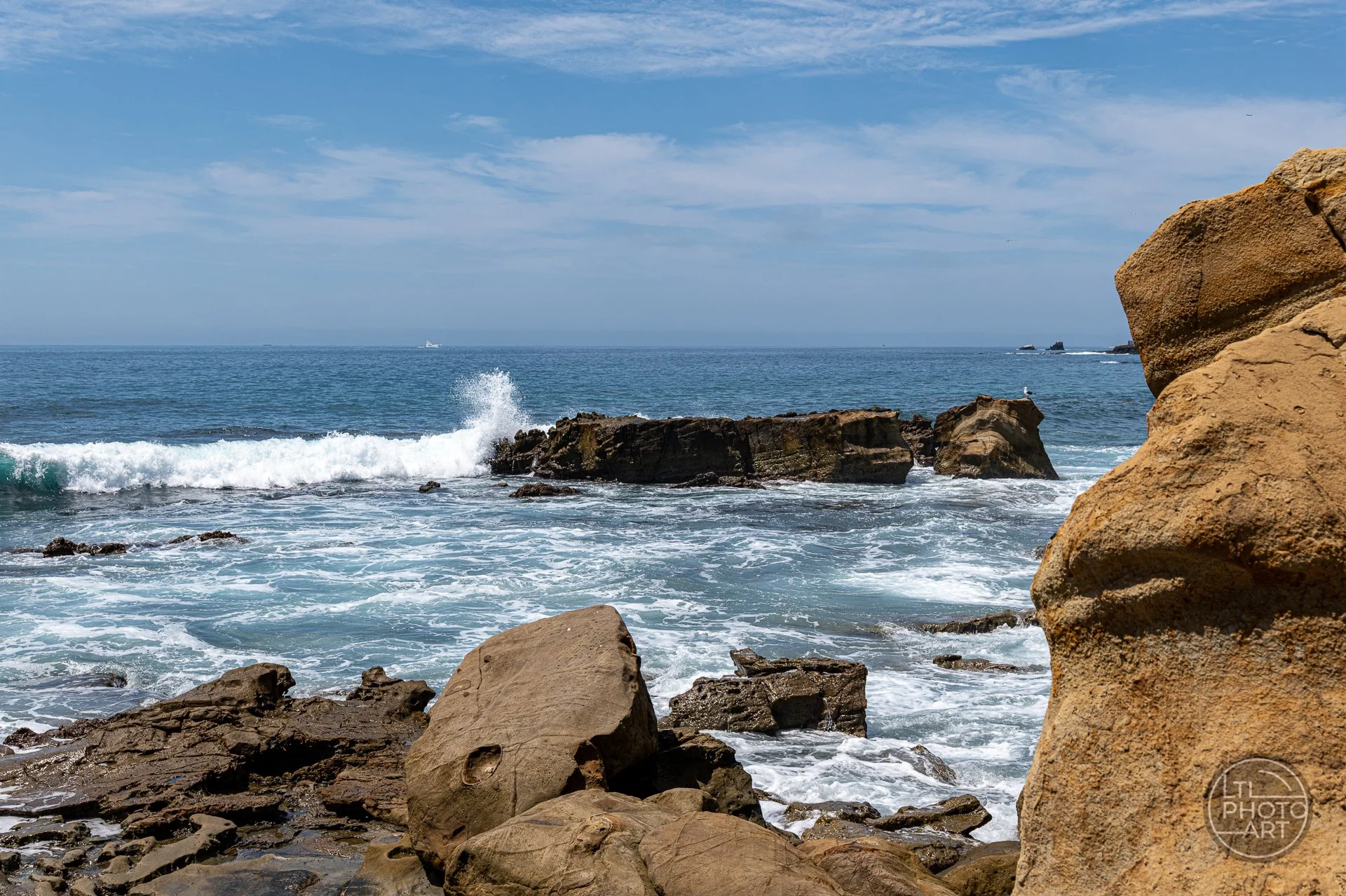
A sea-level view from Monument Point reveals layered coastal rocks, breaking surf, and the open Pacific from one of Heisler Park’s most dramatic shoreline perspectives.
Studying Waves and Timing
Coastal photography changes from one second to the next.
Even when the camera remains in exactly the same position, the shape of a wave, the direction of the water, or the timing of a splash can dramatically alter the composition.
I spent nearly an hour watching waves break across the same section of shoreline, often photographing several frames during a single sequence. Reviewing those images later reinforced how dramatically a fraction of a second can change a photograph.
Some frames captured the water before impact. Others caught the instant a wave struck the rocks. A moment later, the scene transformed into a wall of whitewater before settling back into calmer movement.
There is no single “correct” moment. The goal is to recognize how timing affects balance, energy, and visual flow within the photograph. For me, that often becomes clear only when reviewing a sequence of images. As I move through the frames, several may have compositions I like, and then one suddenly creates an emotional response because the spray, shape, or motion of the water captures the scene in a way the others do not.
This is why coastal landscape photography rewards patience. Instead of taking one photograph and moving on, it often pays to stay with a composition and allow the ocean to create multiple versions of the scene.
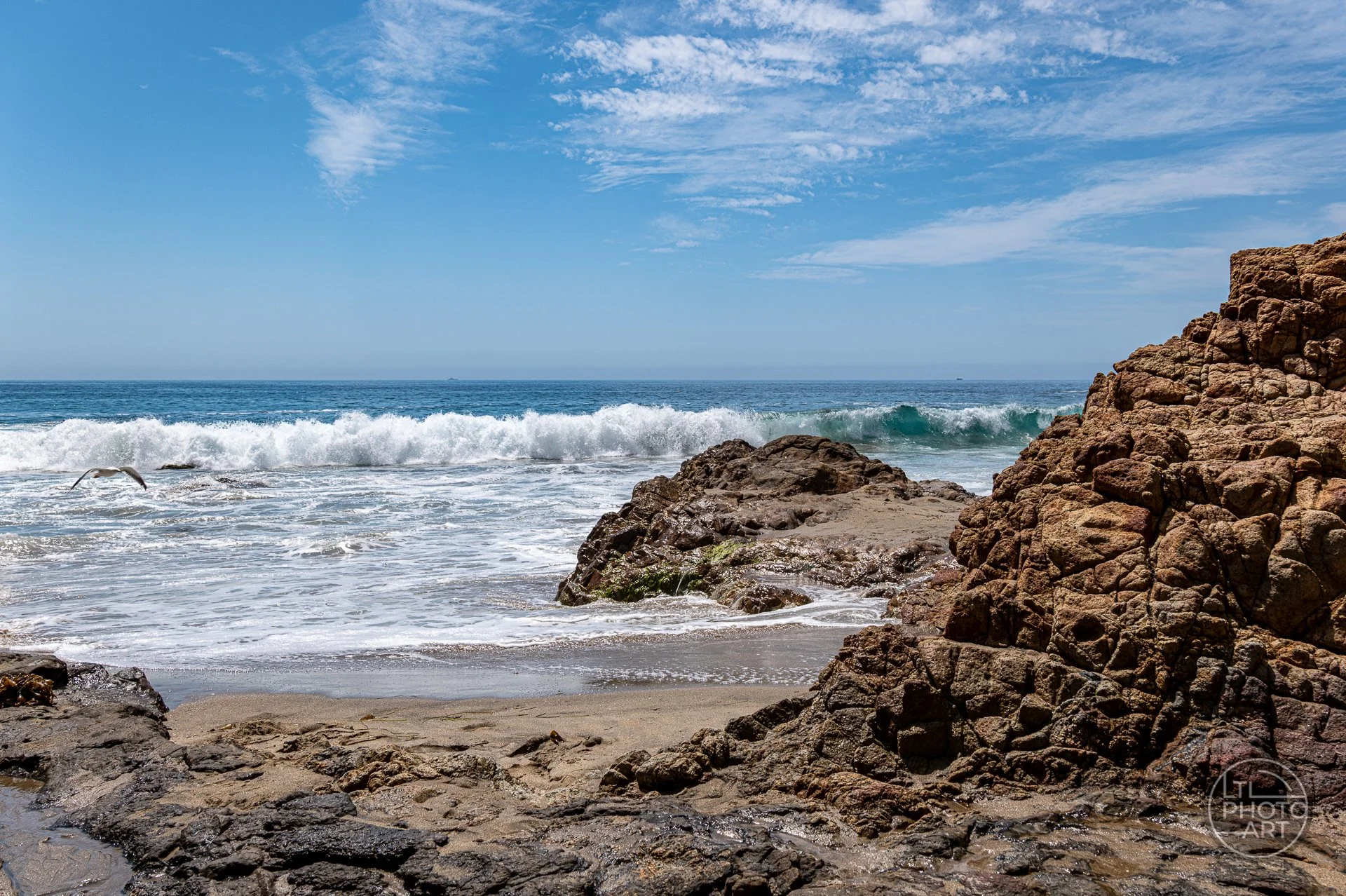
A sea-level view at Rockpile Beach combines rugged shoreline textures, breaking surf, and the open Pacific in a layered coastal composition.
Preparing to Teach in the Field
Scouting is also about preparation for teaching.
When we arrive at a location during the workshop, I want to already understand the range of photographic possibilities available there. That allows us to spend more time discussing why one composition may be stronger than another, how changing position affects the image, how to use foreground interest effectively, and how shutter speed and timing influence the appearance of moving water.
The workshop will not be about standing in one predetermined spot and taking the same photograph.
Instead, we will work on developing the ability to evaluate a scene, make an initial composition, refine it, and then continue searching for alternatives.
That process—observing, experimenting, evaluating, and refining—is one of the most valuable skills a photographer can develop. It applies equally to coastal photography, street photography, landscapes, and nearly every other genre. Laguna Beach simply happens to provide an exceptional outdoor classroom in which to practice those skills.
Join John Hallam and me in Laguna Beach
The Laguna Beach Coastal Photography Workshop takes place September 12–13, 2026.
We will photograph along the Laguna Beach coastline while working on composition, coastal light, wave timing, foreground interest, changing viewpoints, and techniques for creating stronger images in the field.
Whether you are new to coastal photography or looking to strengthen your ability to see and compose more effectively, Laguna Beach offers an ideal environment for learning. Together, we will explore how thoughtful observation, patience, and experimentation can transform a promising scene into a memorable photograph—a true wall hanger.
With only a short time remaining before the workshop, registration is still open.