
How to Photograph Moving Water Along the Coast
Moving water is one of the most dynamic subjects in coastal photography. A wave can explode against a rock, roll gently across the sand, or create patterns and textures that disappear almost as quickly as they form.
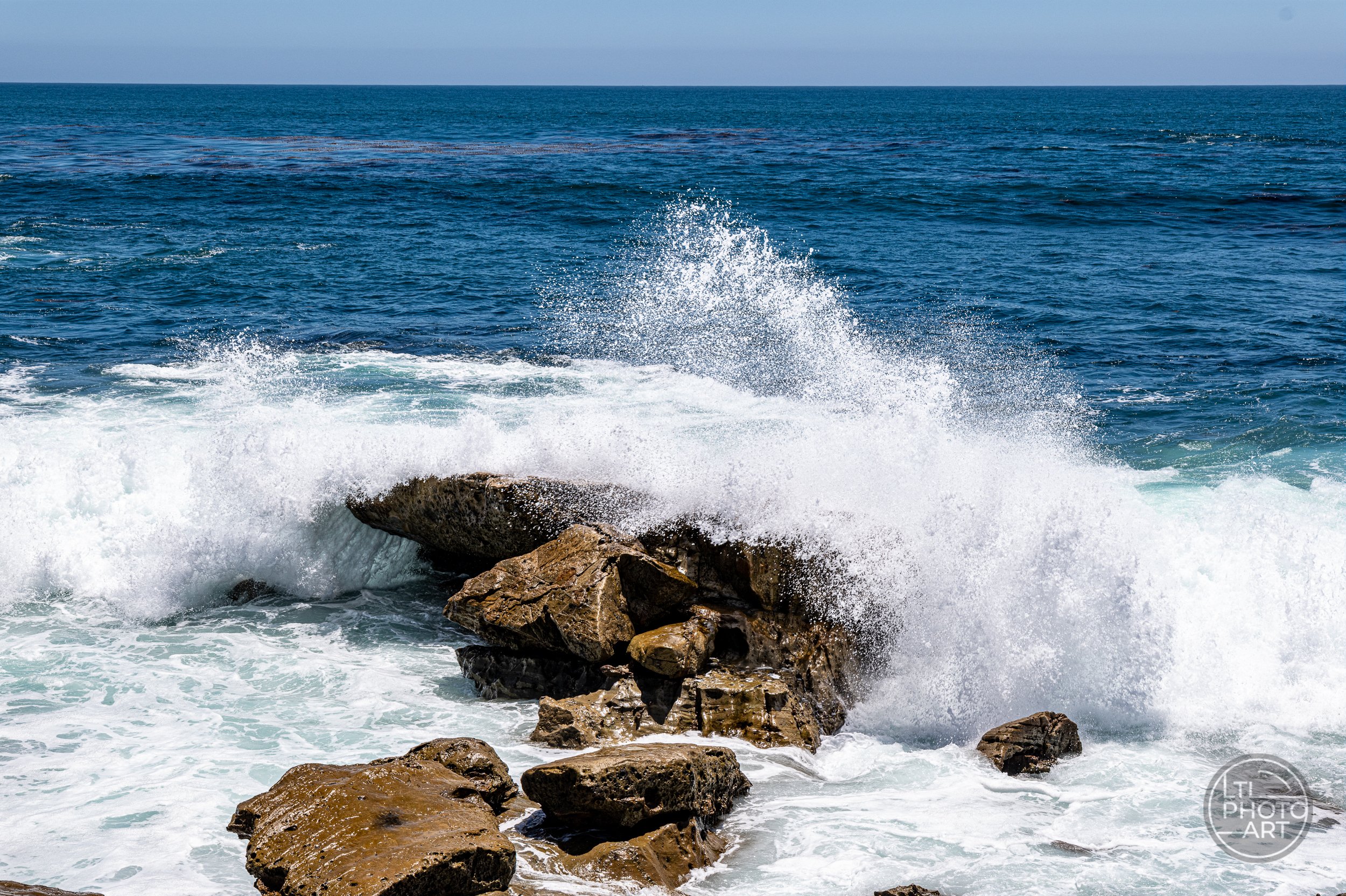
A breaking wave explodes against the rocks at Monument Point, capturing the energy, texture, and unpredictability of moving water.
The challenge is that water never looks exactly the same twice.
That unpredictability is also what makes it so rewarding to photograph. Rather than simply reacting to what happens in front of the camera, stronger coastal photographs often come from observing the water, anticipating what it is likely to do next, and choosing camera settings that support the way you want the scene to feel.
Decide How You Want the Water to Look
Decide what you want the photograph to communicate before choosing a shutter speed,
Do you want to show the power of a wave as it crashes against the rocks? Do you want to capture the shape and texture of moving water? Or do you want the water to become soft and flowing, creating a quieter interpretation of the scene?
1/2000 sec and faster – Captures very crisp droplets and fine detail in exploding water
1/1000–1/1600 sec – Freezes most of the wave impact, spray, and texture
1/500–1/800 sec – Creates a stronger sense of freeze while still preserving some energy
Around 1/350 sec – Keeps the overall shape of the wave while allowing some motion in the spray
1/30–1/125 sec – Introduces visible movement while still retaining some shape and texture in the water
1/4–1 second – Softens waves and creates flowing streaks as water moves around rocks or across the shoreline
1–5 seconds – Creates a smoother, more atmospheric look, with water becoming increasingly soft and ethereal
10 seconds and longer – Can turn moving water into a very smooth, almost mist-like surface
There is no single correct shutter speed for photographing the coast. The right choice depends on the photograph you are trying to make and the available light.
A fast shutter speed can reveal details that the eye barely has time to see. A slower shutter speed can show movement and create a completely different sense of energy.
The important thing is to make the choice intentionally.
Freeze the Action
When waves are breaking hard against rocks or sending spray into the air, a fast shutter speed can capture the power and structure of the water.
The featured image, Wave Impact at Monument Point, illustrates this approach. Photographed at 1/350 second, it captures the exact moment a wave explodes against the rocks, preserving the texture, shape, and energy of the spray.
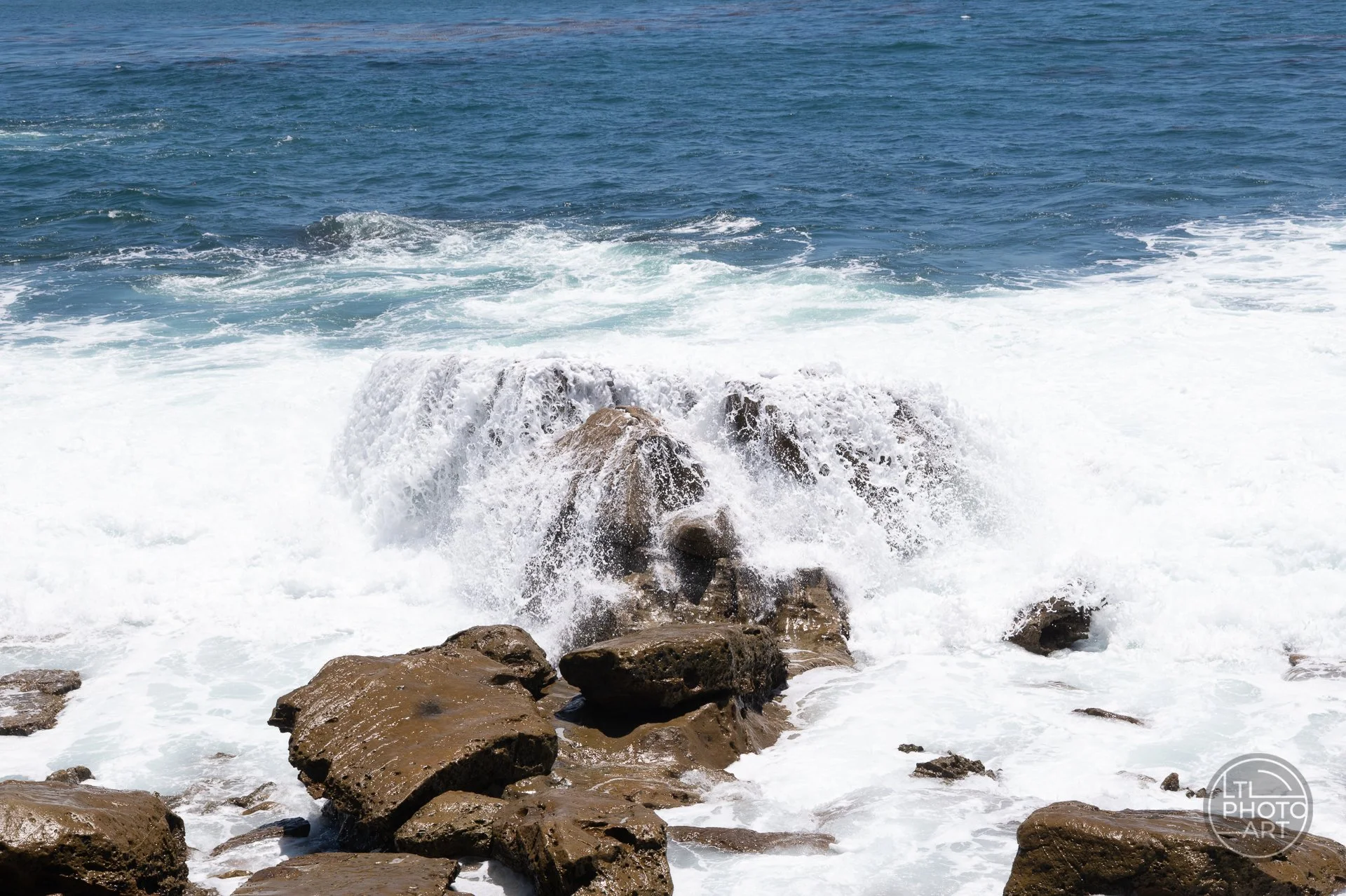
Water pours across the rocks after a breaking wave, showing how timing can reveal patterns and movement that last only a moment.
Shutter speeds around 1/1000 second or faster are often a good starting point for freezing breaking waves, although the exact setting will depend on the speed of the water, available light, and the effect you want.
With a fast shutter speed, individual droplets of water can become visible and the shape of a breaking wave can become part of the composition.
This approach works particularly well when the water itself is the main subject.
Rather than simply photographing every wave that arrives, watch several first. Look for where the waves tend to break, how high the spray reaches, and whether certain rocks consistently create more interesting water movement.
Then you can begin anticipating the moment instead of simply reacting to it.
Show a Sense of Movement
Sometimes completely freezing the water can make a photograph feel too static.
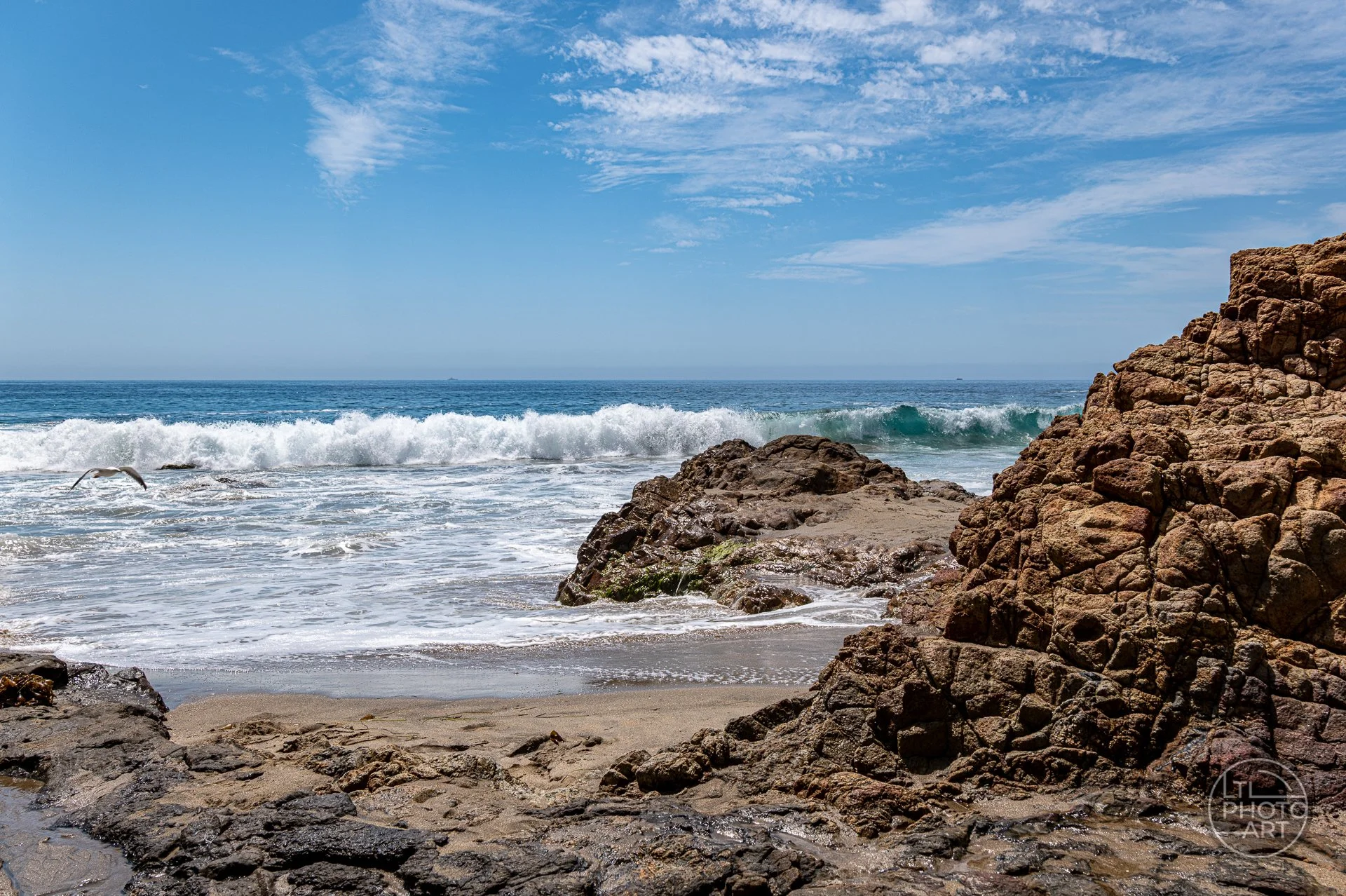
From a low perspective at Rockpile Beach, moving water flows through the foreground and creates a stronger sense of depth and motion.
Using a moderately slower shutter speed can preserve some detail while allowing the water to move through the frame.
Shutter speeds around 1/15 to 1/2 second can create interesting streaks, curves, and textures as waves move around rocks or retreat toward the ocean.
This range can be especially effective when photographing water flowing back across the beach.
Instead of concentrating only on the incoming wave, watch what happens afterward. The retreating water often creates leading lines and patterns that can guide the viewer through the photograph.
Small changes in shutter speed can dramatically change the appearance of the water, so experiment rather than relying on a single setting.
Use Longer Exposures Carefully
Long exposures can transform the character of a coastal scene.
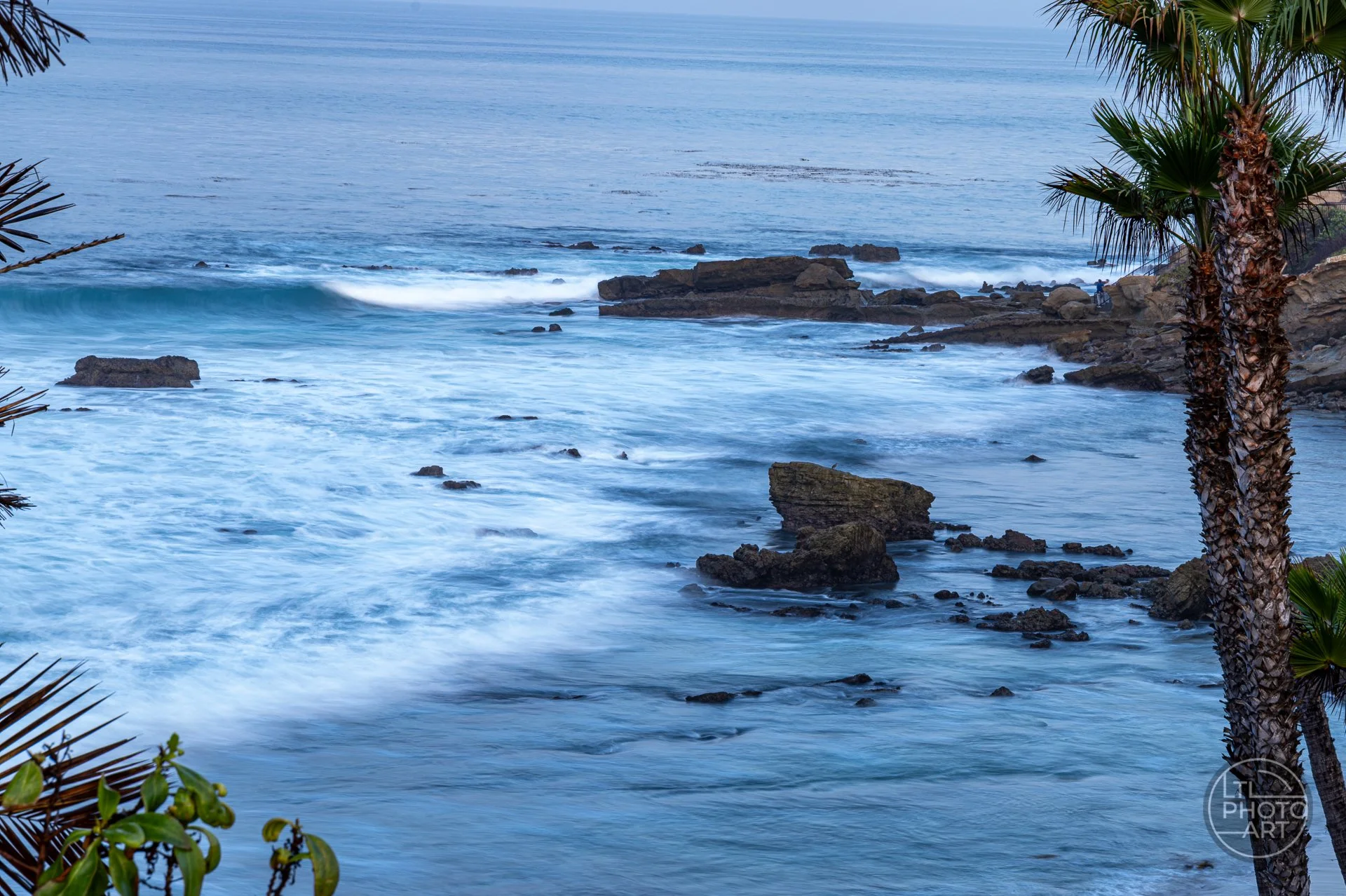
A 1.5-second exposure softens the movement of the water below Monument Point, creating a smoother, more atmospheric interpretation of the coast.
At exposures of several seconds or longer, the ocean may begin to appear smooth and atmospheric. Water moving around rocks can create soft trails, while waves can become more abstract.
A tripod becomes increasingly important as shutter speeds get longer, and neutral-density filters can help reduce the amount of light entering the camera when conditions are too bright for the exposure you want.
But longer is not always better.
If every trace of movement disappears, the water can sometimes lose the energy that made the scene interesting in the first place.
Try several exposure lengths and compare them. Often the most effective photograph is somewhere between completely frozen water and an extremely long exposure.
Watch the Wave Before You Photograph It
One of the most valuable techniques in coastal photography does not involve the camera at all.
Watch.
Spend a few minutes observing the water before beginning to photograph seriously.
Waves often arrive in sets. Certain rocks consistently cause water to break in particular directions. Some waves create dramatic spray while others spread across the foreground.
The more you observe, the easier it becomes to recognize patterns.
Instead of seeing each wave as an isolated event, begin looking for repetition. Once you understand what is happening in the scene, you can position yourself and prepare for the moment you want.
Anticipation usually produces stronger photographs than simply holding down the shutter button and hoping something interesting happens.
Pay Attention to the Foreground
It is easy to become so focused on the breaking wave that the rest of the composition becomes secondary.
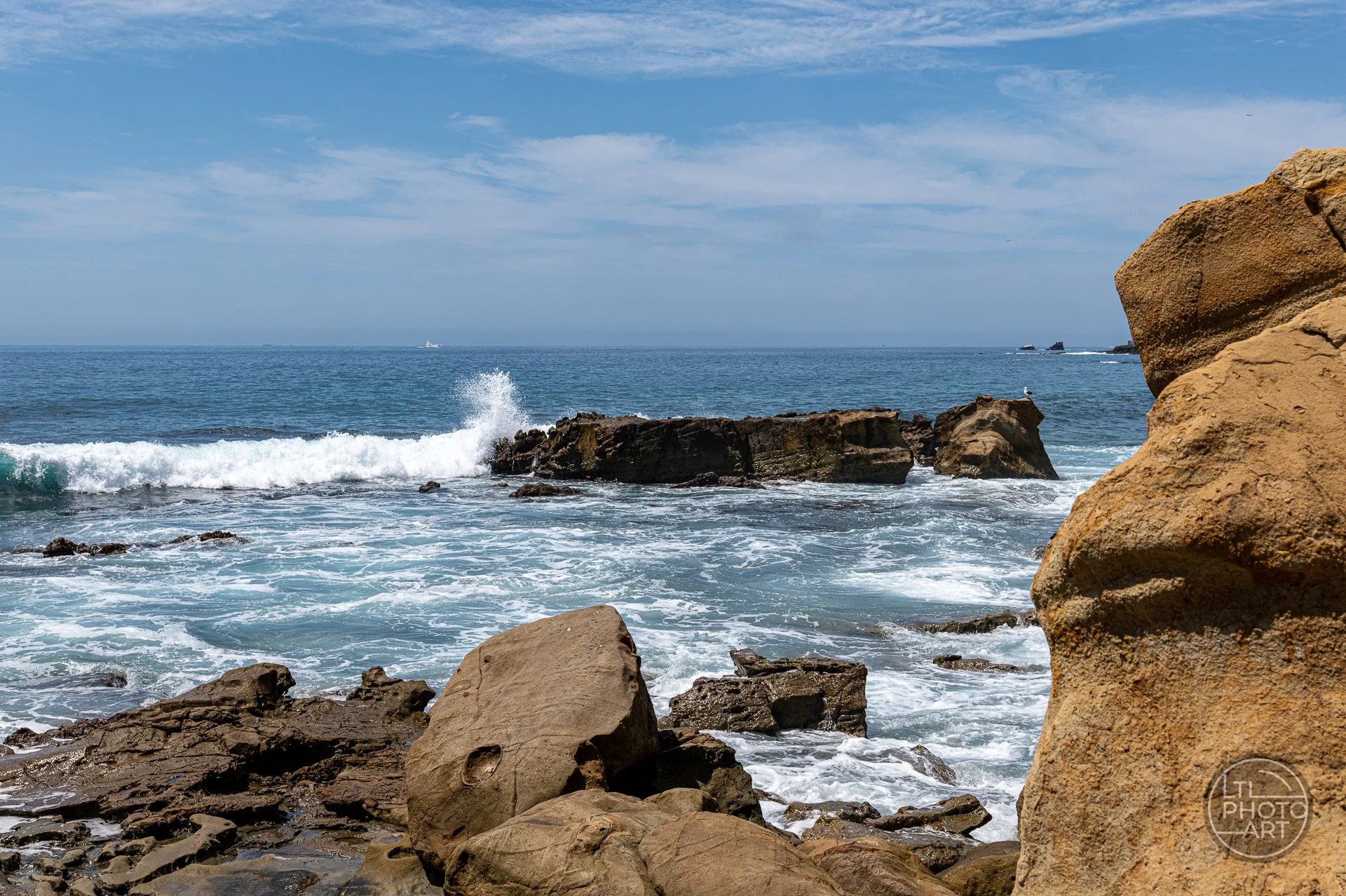
Foreground rocks give structure to the composition while the moving water adds energy and helps lead the eye through the scene.
The foreground can be just as important as the water itself.
Rocks can provide structure and visual weight. Wet sand can reflect light. Water flowing through small channels can create natural leading lines.
Before concentrating on the wave itself, look around the entire frame. Fill the frame intentionally and pay close attention to the edges and corners for distracting elements that may weaken the composition. A powerful wave can capture your attention so completely that it is easy to overlook what else is happening in the photograph.
Ask yourself where the viewer's eye will enter the photograph and how it will move through the scene.
A dramatic wave alone does not always make a strong composition. When the water interacts with an effective foreground, the photograph often becomes much more complete.
Experiment With Your Position
A few feet can make a significant difference along the coast.
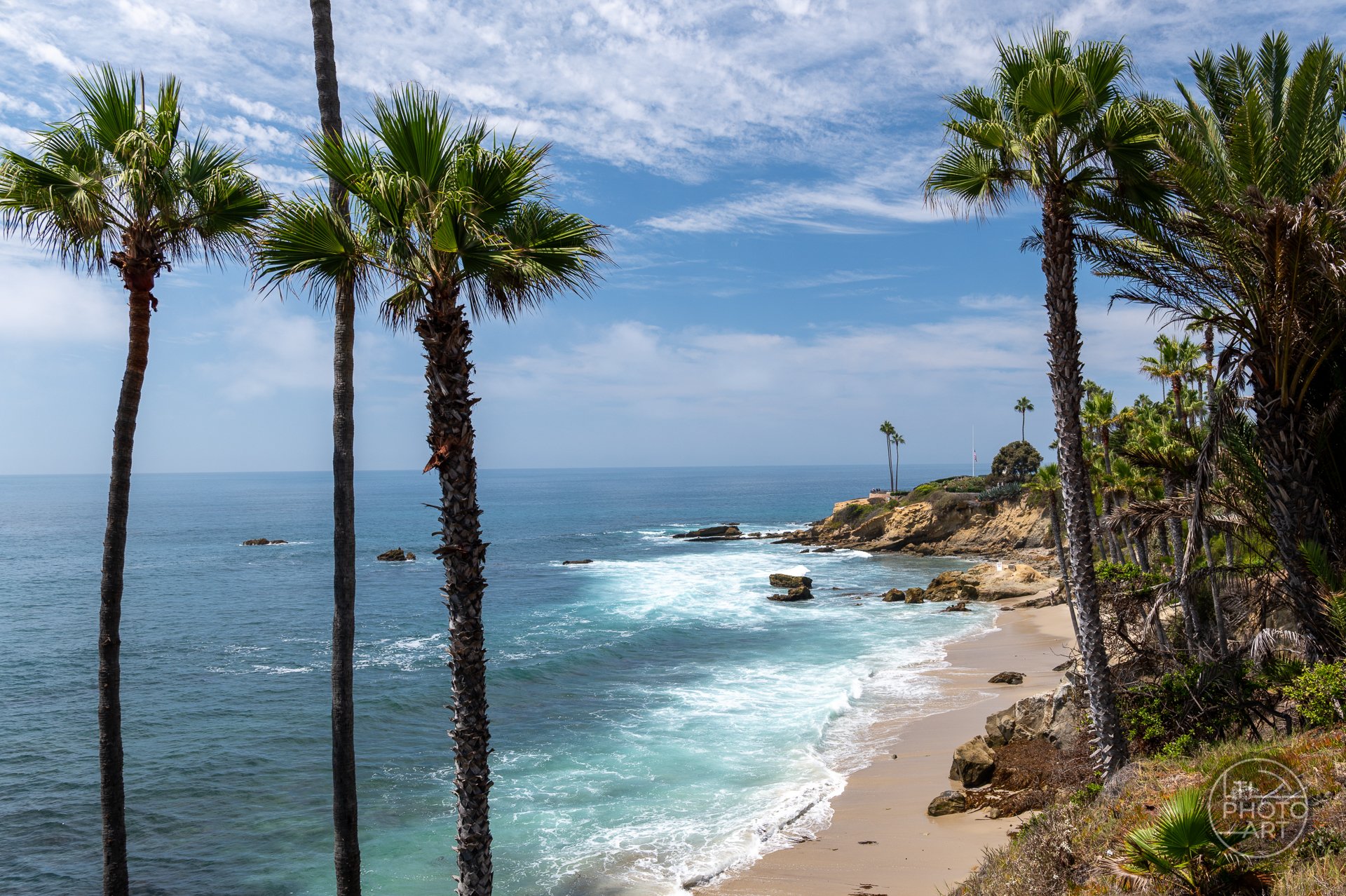
An elevated view toward Monument Point reveals broader patterns in the surf and demonstrates how changing perspective can completely alter a coastal composition.
Moving higher can help reveal patterns in the water. Moving lower can make foreground rocks feel larger and more dramatic. Moving sideways can change the relationship between a breaking wave and the surrounding landscape.
Changing focal lengths can have the same effect.
A wide-angle lens can emphasize foreground elements and create a sense of depth, while a longer lens can isolate water patterns, compress the scene, and simplify the composition.
Rather than finding one position and staying there, explore the location. The Laguna Beach coastline offers countless opportunities to see the same stretch of shoreline from completely different perspectives.
Let the Light Influence the Water
Water reflects whatever light surrounds it, which means its appearance can change dramatically throughout the day.
Early and late light can introduce warmer tones and emphasize texture. Overcast conditions can soften contrast and reveal subtle color. Stronger daylight can produce brilliant blues, greens, and turquoise tones in clear coastal water.
Backlighting can illuminate spray and make individual droplets stand out.
Instead of thinking only about whether the light is “good” or “bad,” pay attention to what the light is doing to the water.
Different conditions simply create different opportunities.
As the tide, waves, and light change, new compositions often emerge from the same location. Staying with a scene long enough to recognize those changes can be just as important as the camera settings you choose.
Coastal Safety Matters
No photograph is worth risking your safety.
Waves can be unpredictable, especially around rocks, tide pools, and narrow shoreline ledges. Pay attention to incoming sets, watch your footing, and always maintain awareness of changing ocean conditions.
A successful day of coastal photography is one that ends with both great photographs and a safe return home.
Make More Than One Interpretation
One of the advantages of photographing moving water is that the scene is constantly changing.
Take advantage of it.
Try freezing a wave, then slow the shutter speed and photograph the same location again. Move closer. Step back. Change your focal length. Wait for a larger wave. Photograph the retreating water instead of the incoming surf.
The goal is not to come home with dozens of nearly identical photographs.
It is to explore how different choices change the way the scene feels.
Moving water gives us an opportunity to photograph not only what the coast looks like, but also how it moves.
No two waves are ever exactly alike. The more time you spend observing the rhythm of the ocean, the more intentional your photographs become. Whether you freeze the impact of a crashing wave or use a longer exposure to reveal its flow, the goal is not simply to photograph water. It is to capture the character and feeling of the place.
Along the Laguna Beach coast, that feeling is constantly changing, which is why moving water remains one of the most rewarding subjects in landscape photography.