
How to Choose Fine Art Photography for Your Home or Office
Choosing artwork for a home or office can feel surprisingly difficult. A photograph may catch your eye online, but it can be challenging to know whether it will feel right once it is hanging on the wall.
Fine art photography can do much more than decorate a space. It can create atmosphere, spark memories, introduce a sense of place, and become something you enjoy living with every day.
A coastal landscape can create a feeling of calm, a dramatic mountain scene can add energy and scale, while architectural or black-and-white photography can bring structure and sophistication to a room.
The goal is to choose an image that belongs in the space and continues to hold your attention over time.
Start with the Mood You Want to Create
Before choosing a particular photograph, think about how you want the room to feel.
A coastal image with open water, softer light, and subtle movement can create a calm, relaxed atmosphere. Mountain landscapes can bring a sense of scale, exploration, and connection to nature. Black-and-white photographs can feel quieter, more graphic, or more timeless, while architectural and travel photography can add character and a strong sense of place.
The image does not necessarily have to match the colors already in the room. In many cases, contrast can be more interesting. What matters is whether the photograph contributes to the atmosphere you want to create.
Match the Photograph to the Space
Different spaces often call for different types of photographs.
A living room may accommodate a larger landscape that becomes a focal point. An entryway can benefit from an image with immediate visual impact. A bedroom may be better suited to something quieter and more calming.
In an office or conference room, photography can establish personality and create atmosphere without overwhelming the space. Landscapes, architecture, black-and-white images, and photographs connected to a company's location or values can work especially well in professional environments.
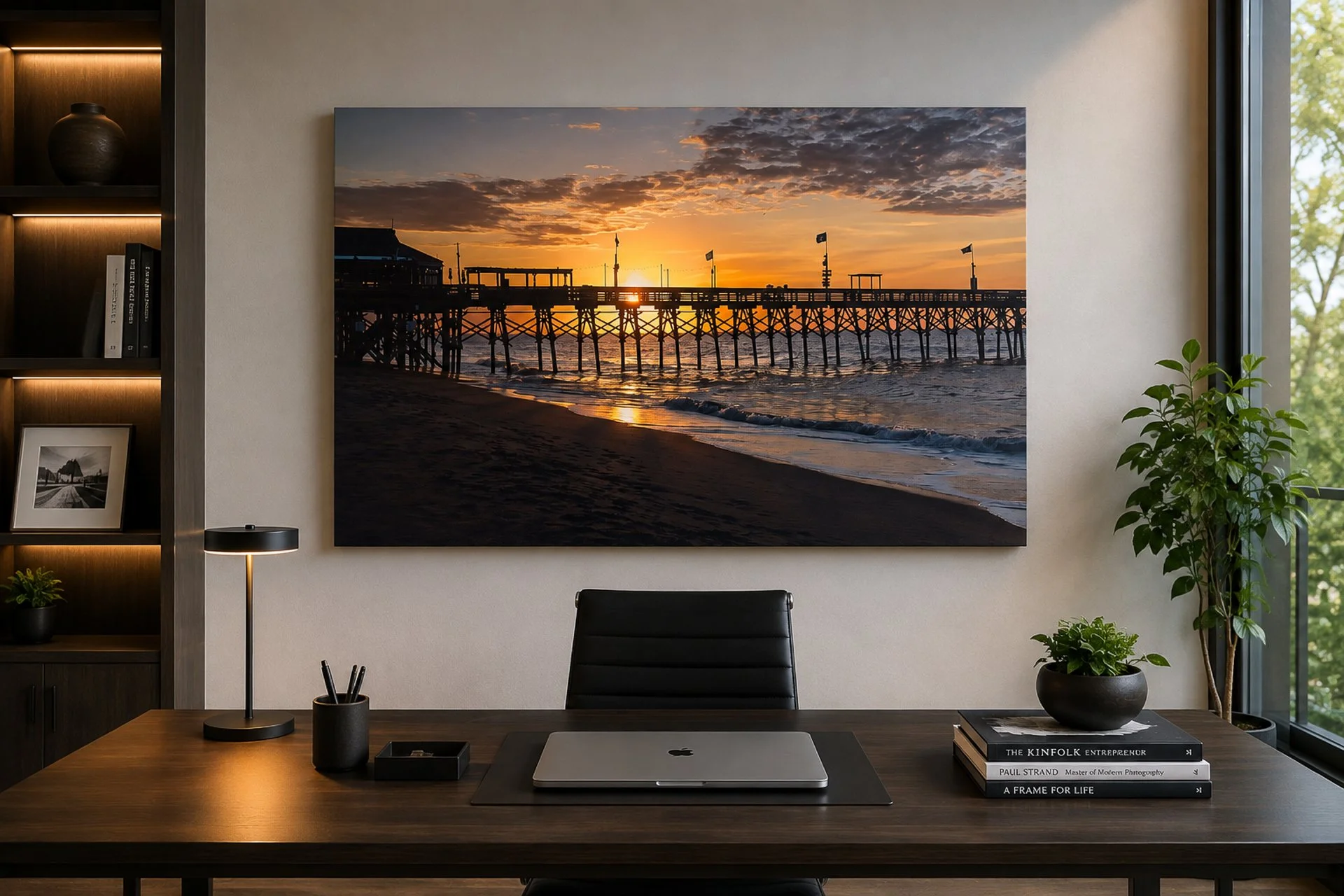
A well-chosen photograph can give an office personality while creating a calm, focused atmosphere.
Consider not only what is on the wall, but also how the room is used and how long people typically spend there.
Choose the Right Scale for the Space
One of the most common challenges when selecting artwork is choosing a piece that feels appropriately scaled for the wall.
A photograph that looks substantial on a computer screen can appear surprisingly small once it is placed above a sofa, desk, credenza, or conference table.
On a large wall, a single photograph often needs enough scale to hold its own within the room.
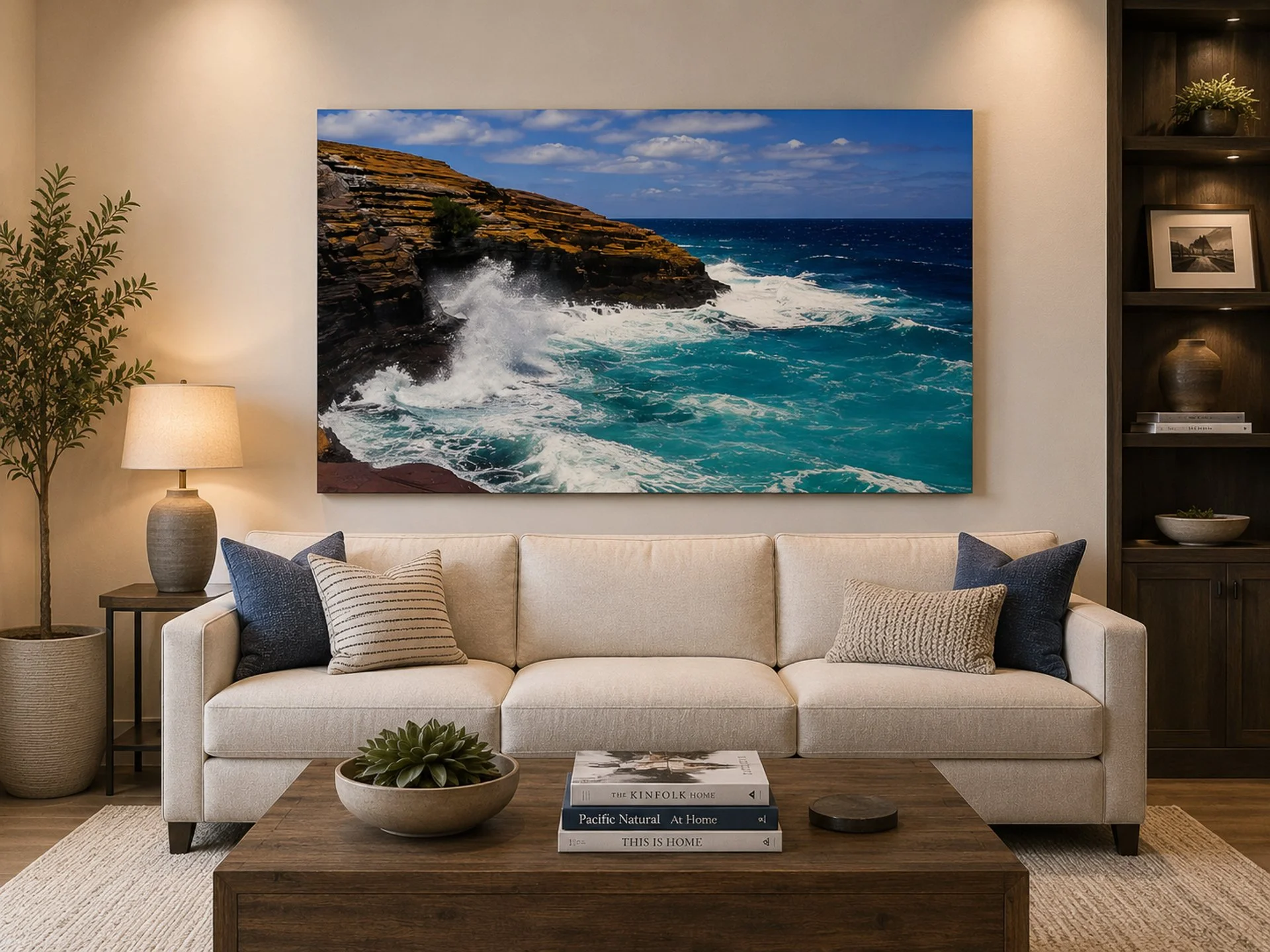
One large coastal photograph can anchor a room and create an immediate focal point through scale, color, and movement.
Rather than thinking only about the dimensions of the photograph, consider how much of the wall it should visually occupy. Larger pieces often create a more intentional and finished appearance, particularly on prominent walls.
Before purchasing, it can help to mark the proposed dimensions on the wall with painter's tape. This provides a much better sense of scale than trying to visualize measurements alone.
Think Beyond the Image
The photograph is only part of the final presentation.
The material and finish can significantly affect how the artwork feels in a room.
Fine art paper offers a traditional photographic presentation and works well when framed and matted.
Canvas can create a softer presentation without the visual weight of a traditional frame.
Metal prints often emphasize color, contrast, and detail and can work particularly well with landscapes and coastal photography.
Acrylic presentations can create a contemporary appearance with depth and strong visual impact.
The right choice depends on the photograph, the room, and the style of the surrounding furnishings.
Framing Matters Too
The frame can significantly influence how a photograph feels within a room.
Simple black frames often complement black-and-white photography and modern interiors. Natural wood frames can introduce warmth and pair well with landscapes and travel photography, while white frames can create a clean, contemporary presentation.
Matting can also affect the visual impact of an image. Larger mats help draw attention to the photograph itself and often create a more gallery-like appearance.
The goal is to choose a presentation that complements both the artwork and the surrounding space without competing for attention.
Whether you select a framed print, canvas, metal print, or acrylic presentation, the way a photograph is displayed becomes an important part of the overall viewing experience.
Choose a Photograph That Means Something
Technical considerations matter, but they should not be the only reason you choose a photograph.
The strongest connection to artwork is often personal.
A coastal photograph might remind you of time spent near the ocean. A mountain landscape may recall a favorite trip or a place you hope to visit. A photograph of New Orleans, Hawaii, Alaska, Colorado, or Italy might connect to a particular experience or memory.
Sometimes the connection is less specific. An image may simply make you want to stop and look at it.
That is enough.
Artwork becomes part of your everyday environment. Choosing something that creates an emotional response will generally be more rewarding than selecting an image simply because its colors match the furniture.
Consider a Collection Rather Than a Single Photograph
Not every wall needs one large photograph. In some spaces, a thoughtfully arranged collection can create greater visual interest and tell a broader story.
A gallery wall works especially well when the photographs share a common connection, such as location, subject, color palette, or photographic style. One larger image can serve as the visual anchor, while smaller photographs around it add variety and help create balance.
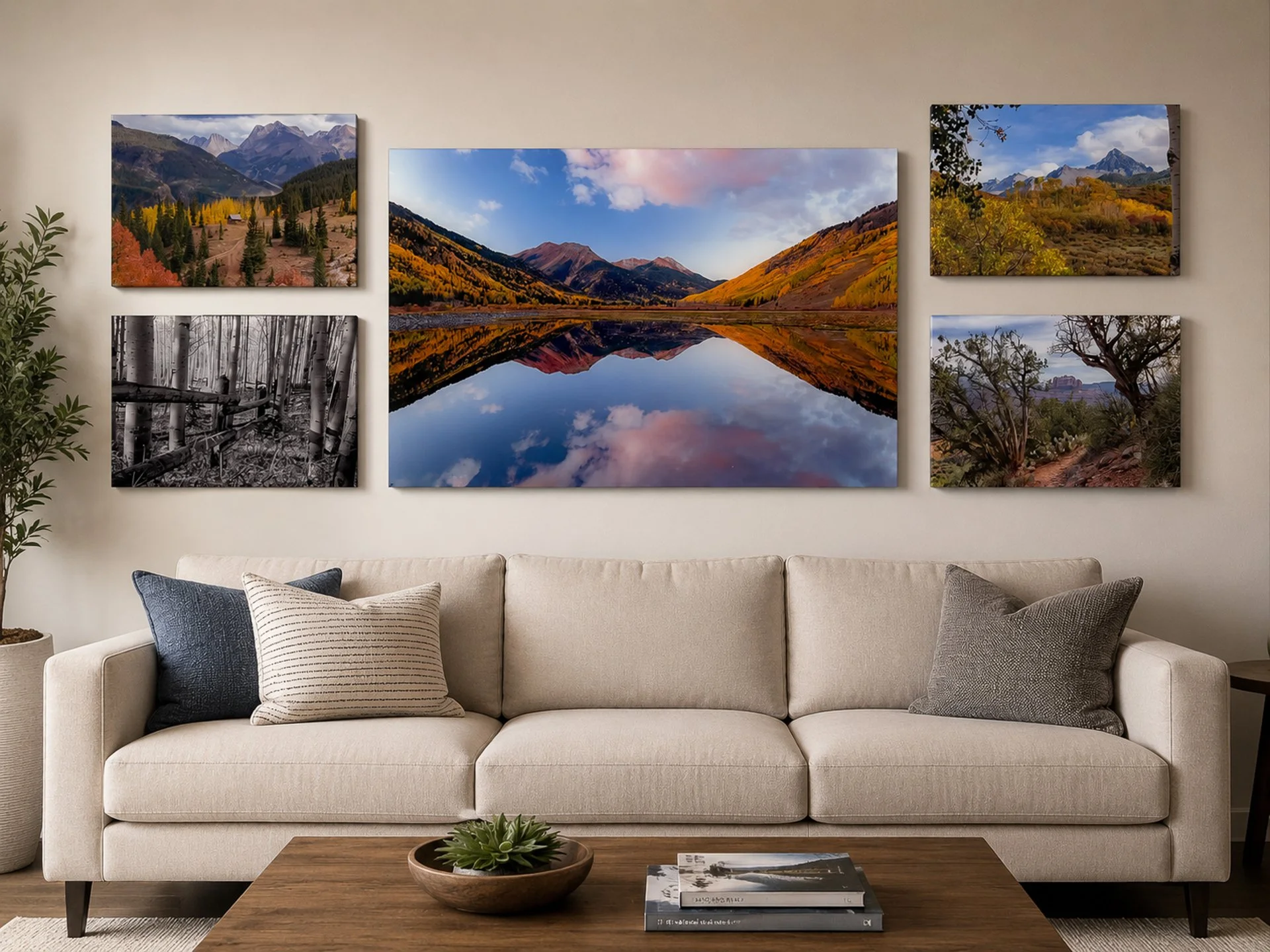
A collection of related photographs can create a stronger visual statement than a single image while still allowing each piece to stand on its own.
A mountain collection, for example, might combine sweeping landscapes, autumn color, forest scenes, and more intimate views of the environment. A New Orleans grouping could bring together architecture, riverfront scenes, street photography, and quieter moments from around the city. Coastal photographs can be paired through waves, rock formations, and changing light, while black-and-white images often work especially well together because their tonal consistency helps unify different subjects.
The photographs do not need to be identical in size, orientation, or subject. What matters is that they feel related and that the arrangement creates a sense of balance.
Before hanging a gallery wall, it can be helpful to lay the arrangement out on the floor first. This allows you to experiment with spacing, balance, and image placement before making holes in the wall.
Maintaining consistent spacing between frames often helps a collection feel intentional and cohesive. Small adjustments in placement can make a significant difference in how the final arrangement feels within the room.
A well-planned collection allows each photograph to stand on its own while contributing to a larger visual story.
Finding the Right Photograph
The LTL Photo Art collections include coastal landscapes, travel destinations, black-and-white imagery, architecture, nature photography, and photographs from places such as New Orleans, Hawaii, Colorado, and Laguna Beach.
Whether you are drawn to the movement of the Pacific, mountain landscapes, city architecture, or quieter black-and-white scenes, the best place to start is with subjects that already hold personal meaning.
Rather than beginning with the question, What matches my room? I encourage people to first ask: Which photograph do I want to keep looking at?
Once you find that image, decisions about size, framing, and presentation become much easier.
Art Should Do More Than Fill a Wall
The right photograph can change how a room feels.
It can introduce color, provide a focal point, create a sense of calm or energy, remind you of a place you love, or simply give you something worth stopping to look at.
Fine art photography should do more than occupy an empty wall.
It should create a connection.
And when you find an image that does that, you have probably found the right piece.
Explore the LTL Photo Art Collections
Whether you are looking for a statement piece, building a gallery wall, or searching for artwork connected to a favorite place, explore the LTL Photo Art collections featuring coastal landscapes, travel photography, black-and-white imagery, architecture, nature, and more.
Find a photograph that creates a lasting connection with a place, experience, or moment that means something to you.