
Behind the Blowhole: Photographing Halona Beach Cove
Planning a photography trip often begins with well-known locations. Sometimes, however, the greatest rewards come from an unexpected recommendation, a conversation with a local, or a willingness to explore beyond the obvious viewpoint.
While researching a photography trip to Oahu, I added the Halona Blowhole to my list of locations. Years earlier, I had stayed at the same hotel while attending a business meeting, so when I returned to the island with photography in mind, I stopped by to visit members of the hotel’s meeting staff.
As I described the locations I planned to photograph that day, one of the staff members, a local resident, offered a suggestion I had not come across during my research. She told me about a trail to the right of the Halona Blowhole parking area that leads down to a small, secluded cove below the overlook.
Many visitors stop at the blowhole, take a few photographs, and continue along the coast without ever realizing the cove lies beneath them.
Starting at the Halona Blowhole
I began at the overlook, photographing the power of the ocean as waves surged into the rocky shoreline and forced water high into the air through the blowhole.
From above, the scene was dramatic and energetic. The elevated perspective allowed me to capture the relationship between the dark volcanic rock, the crashing waves, and the brilliant blue Pacific stretching into the distance.
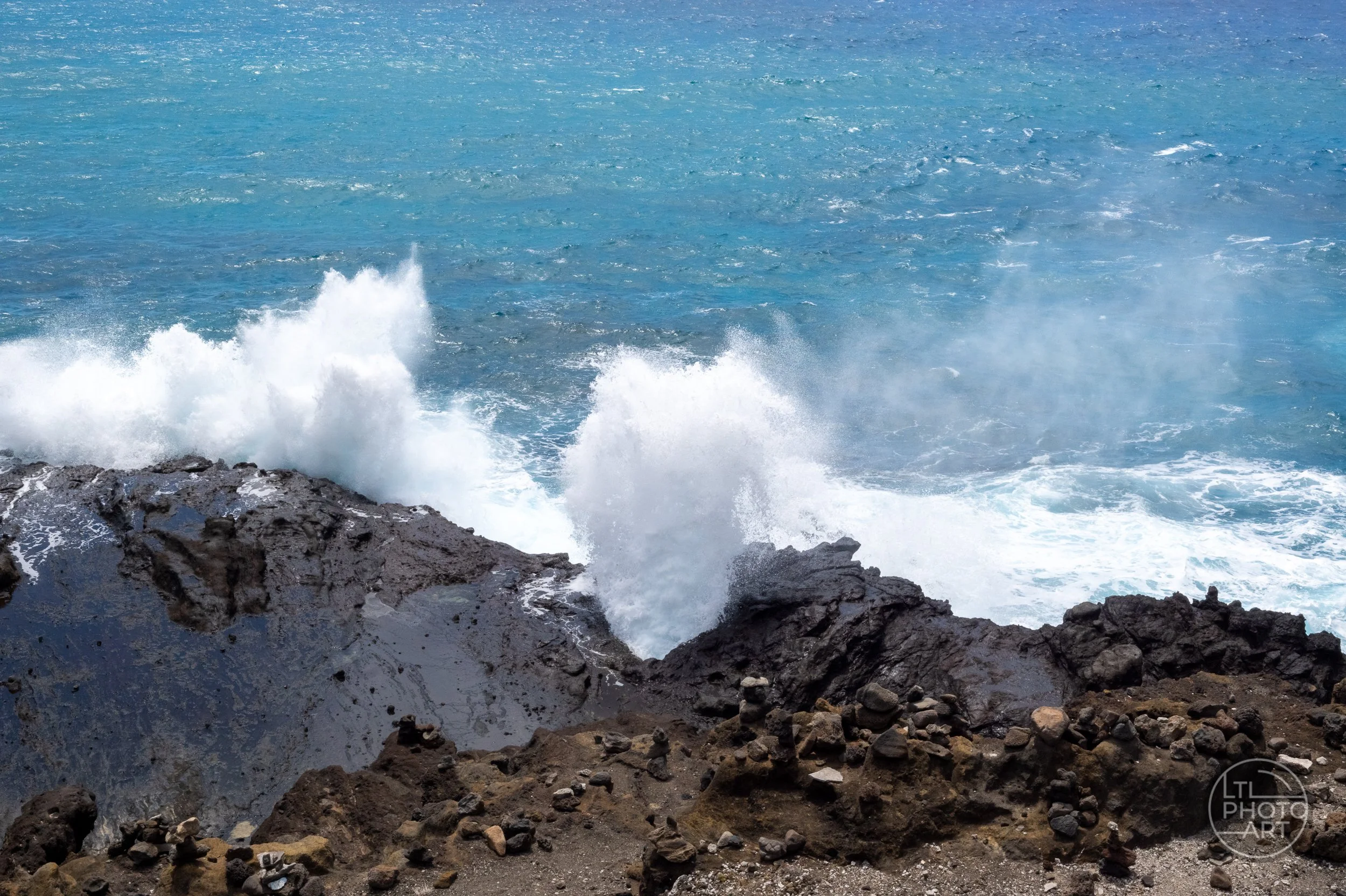
Waves surge through the rocky shoreline at the Halona Blowhole, sending spray high above the rugged Oahu coastline.
After photographing the blowhole from several angles, I decided to follow the local recommendation and make my way down to Halona Beach Cove.
Moving Down to Sea Level
Reaching the cove completely changed the photographic experience.
From sea level, the coastline felt larger, more immediate, and far more dynamic. Waves rolled into the protected inlet, collided with the surrounding rock formations, and spilled across uneven ledges like temporary waterfalls before retreating into the ocean.
Instead of photographing the landscape from a distance, I was now photographing from within it.
The lower perspective created stronger foreground interest and allowed layers of rock, moving water, and sky to build depth throughout the composition. Each incoming wave transformed the scene, creating new patterns, reflections, and possibilities.
I spent more than an hour exploring the cove, moving from one vantage point to another and watching how the constantly changing ocean reshaped the landscape.
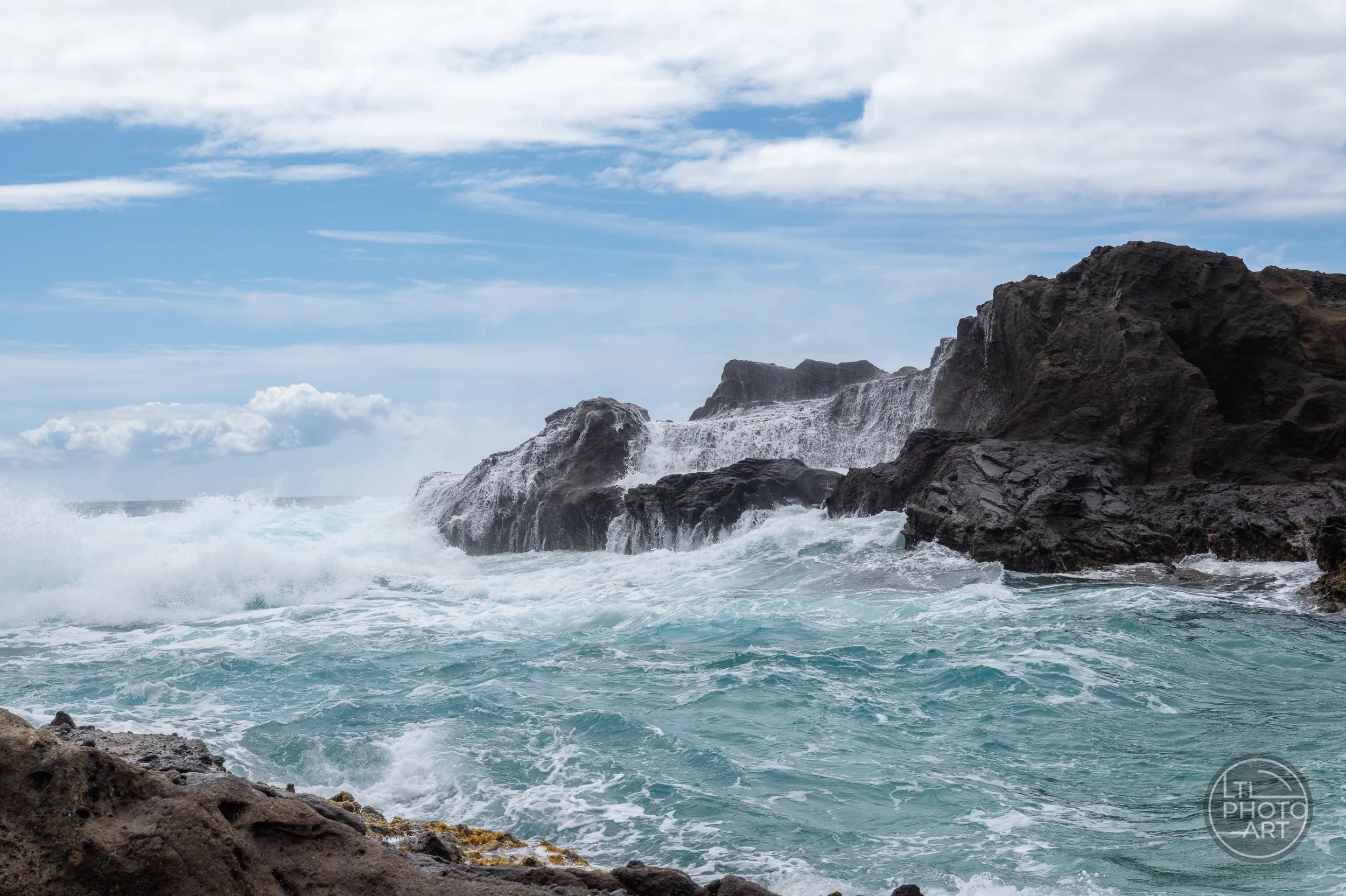
From sea level, waves pour across the volcanic rock formations surrounding Helona Beach Cove.
Looking Back Toward the Blowhole
As I worked my way around the cove, I eventually turned my camera back toward the overlook and the blowhole.
The reverse perspective revealed a scene that could never be fully appreciated from the parking area above. Dark cliffs framed the turquoise water while waves swept across the rock shelves below. In the distance, the blowhole occasionally erupted, adding another layer of energy to the composition.
Visitors standing near the overlook provided a sense of scale, emphasizing the size and ruggedness of the volcanic coastline.
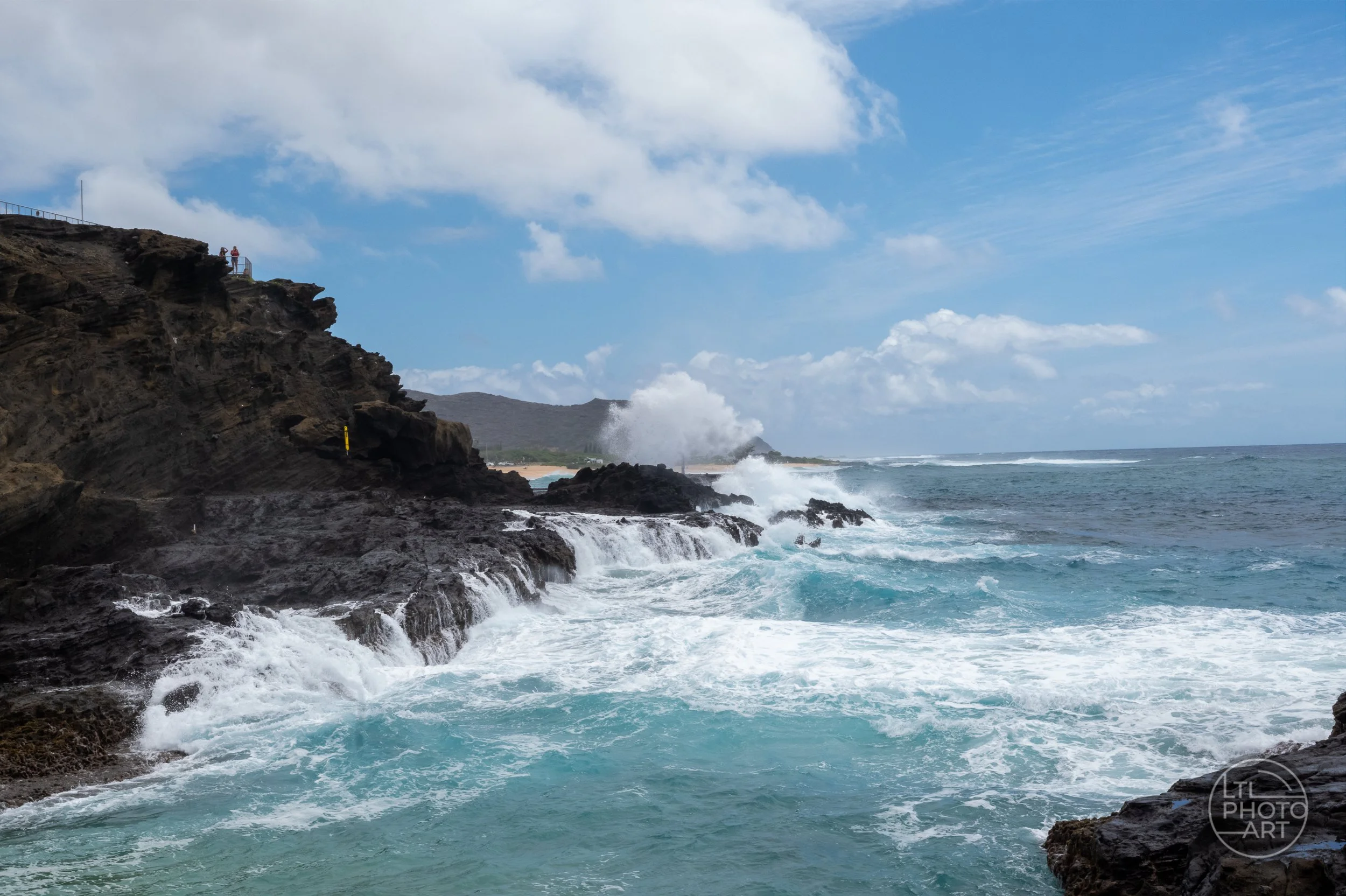
Looking back from Halona Beach Cove toward the blowhole, with visitors standing high above the rocky shoreline.
The Value of Local Knowledge
This experience reinforced an important lesson about travel photography: research provides a starting point, but conversations often lead to the most memorable discoveries.
The Halona Blowhole was the destination on my itinerary. Halena Beach Cove became the experience I remembered.
Had I photographed the blowhole and returned directly to my vehicle, I would have missed the opportunity to experience the coastline from an entirely different perspective. Moving down to sea level allowed me to work the scene, experiment with multiple compositions, and create a more complete visual story of the location.
Sometimes the Best Viewpoint Is Not the Obvious One
Sometimes the best photograph is not found at the designated viewpoint.
Sometimes it is discovered by taking the path beside it.
Explore More Coastal Photography
Discover additional images from Hawaii and other coastal destinations in the Coastal Landscapes Collection.