
A Photographer’s Guide to Heisler Park in Laguna Beach
Perched above the Pacific Ocean just north of Main Beach, Heisler Park is one of Laguna Beach’s most photographed and visually captivating coastal destinations. Stretching along the bluff tops, the park offers sweeping ocean panoramas, beautifully maintained gardens, public art, palm-lined paths, and access to nearby coastal areas such as Diver’s Cove and Rockpile Beach.
For photographers, Heisler Park is much more than a scenic park. It is a place where multiple compositions can exist within a single view. Ocean cliffs, palm trees, rocky shorelines, crashing waves, tide pools, surfers, and ever-changing light combine to create endless photographic opportunities. Whether you are capturing expansive coastal landscapes or intimate shoreline details, Heisler Park offers a rewarding experience for photographers of every skill level.
Why Heisler Park Is a Photographer’s Paradise
What makes Heisler Park so appealing is the remarkable variety of subjects available within a relatively short walk. From the bluff-top pathways, photographers can capture dramatic views of the Pacific Ocean, rugged cliffs, sandy coves, coastal gardens, palm-lined overlooks, and iconic landmarks such as Monument Point and Bird Rock.
The park encourages photographers to think beyond a single image. One moment you may be composing a sweeping landscape that showcases the coastline. A few minutes later, you may find yourself focused on the intricate textures of wet rocks, patterns in the surf, or reflections in a tide pool.
Light plays a major role in photographic possibilities. Soft morning light creates a peaceful atmosphere, while late afternoon and golden hour can bathe the cliffs and shoreline in warm coastal tones. Even during brighter conditions, the contrast between land, sea, and sky can produce compelling images filled with texture and movement.
What keeps photographers coming back is the constant change. Tides rise and fall, waves reshape the foreground, weather alters the mood, and each visit offers new opportunities to create something different. Heisler Park rewards those willing to slow down, observe carefully, and explore beyond the obvious view.
Begin with the Big Picture
When arriving at Heisler Park, the expansive coastal vistas immediately command attention. The elevated bluff-top paths provide an ideal starting point for capturing the character of Laguna Beach. From these overlooks, the coastline unfolds in layers of ocean, cliffs, beaches, palms, and sky.
Wide-angle compositions help establish a strong sense of place. They showcase the scale of the coastline and reveal how the park connects a collection of photographic opportunities along its length.
As you compose, look for natural leading lines. Curving shorelines, walking paths, cliff edges, and rows of palm trees can guide the viewer’s eye through the frame and create depth. Incorporating foreground elements such as coastal plants, rocks, or textured ground can add dimension and strengthen the overall composition.
Light dramatically influences these scenes. During sunrise and golden hour, warm light can add richness and atmosphere to the landscape. Brighter midday conditions often emphasize texture in the cliffs and movement in the water.
Before releasing the shutter, take a moment to evaluate the entire frame. Check the horizon, scan the corners for distractions, and consider whether each element contributes to the story you are trying to tell. Starting with the larger scene provides context and often reveals smaller photographic opportunities hidden within the landscape.
Photographing Monument Point
One of the most recognizable features visible from Heisler Park is Monument Point, a dramatic rocky outcrop that anchors the coastline north of the park. The point provides a powerful visual focal point and serves as an excellent subject for both wide and telephoto compositions.
From the bluff-top overlooks, Monument Point can become part of a grand coastal landscape, surrounded by rolling surf, distant horizons, and sweeping shoreline curves. With a longer lens, photographers can isolate wave action, rock formations, surfers, or details along the point itself.
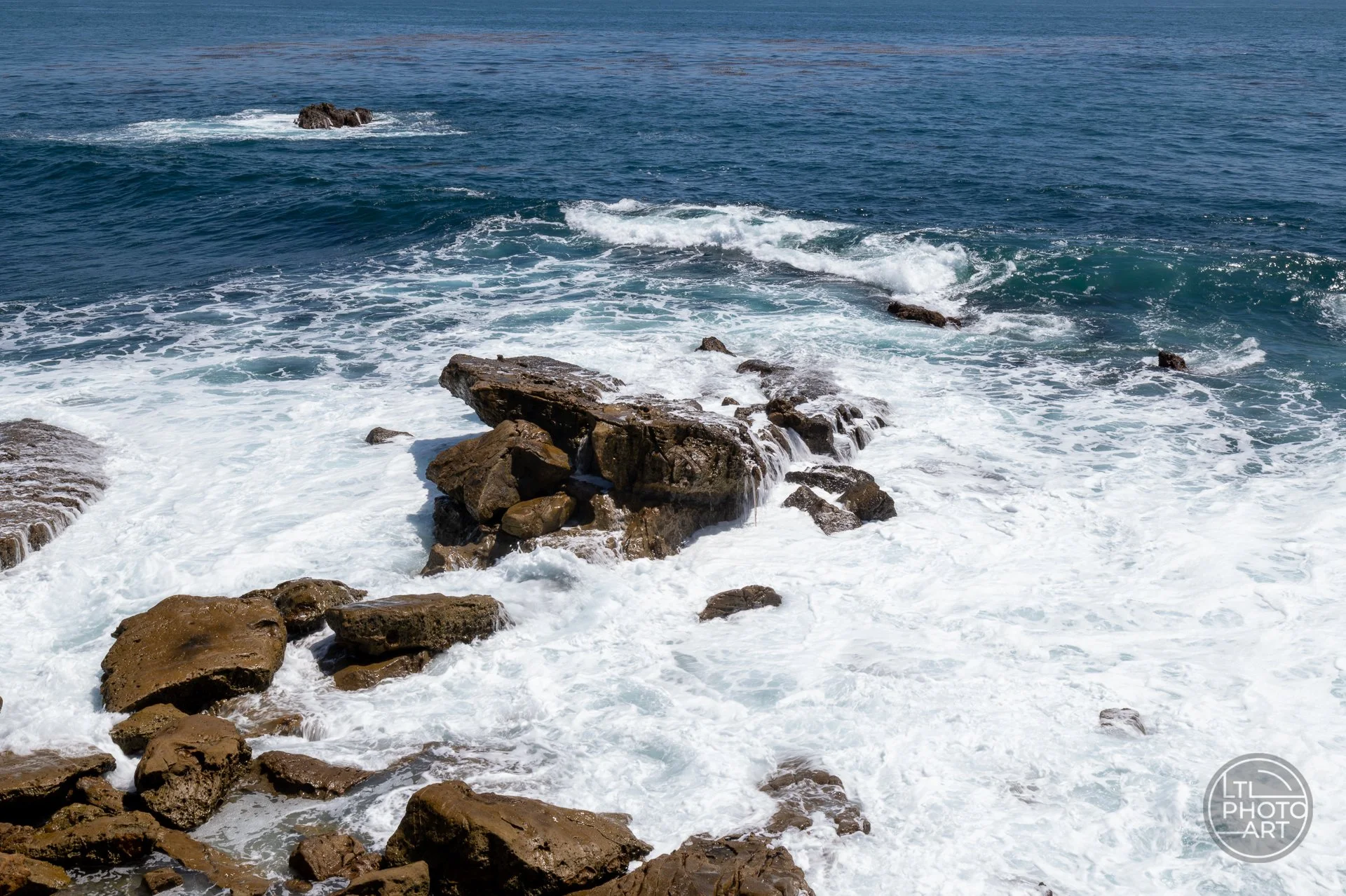
An elevated view above Monument Point shows how shutter speed can shape the feeling of moving water, turning waves and foam into softer patterns around the rocks.
The strongest compositions often use Monument Point as part of a larger visual story rather than the sole subject. Foreground plants, shoreline curves, and wave patterns can create pathways that naturally draw the viewer toward the point while adding depth and balance to the image.
Changing your perspective can dramatically alter the photograph. Elevated viewpoints emphasize the relationship between land and sea, while lower vantage points closer to the shoreline create a more immersive experience with foreground texture and water movement.
Patience is especially valuable here. A calm ocean may create a contemplative mood, while a larger wave exploding against the rocks can transform the same composition into something dynamic and powerful. Tide, swell, weather, and light all play important roles in shaping the final image.
Monument Point is at its best when it becomes part of a thoughtfully composed scene rather than simply a landmark in the frame.
Move Down to Sea Level at Bird Rock
While the elevated overlooks offer spectacular landscapes, some of the most compelling photographs at Heisler Park can be found closer to the water. Bird Rock provides an excellent opportunity to work from sea level and create images with greater intimacy and impact.
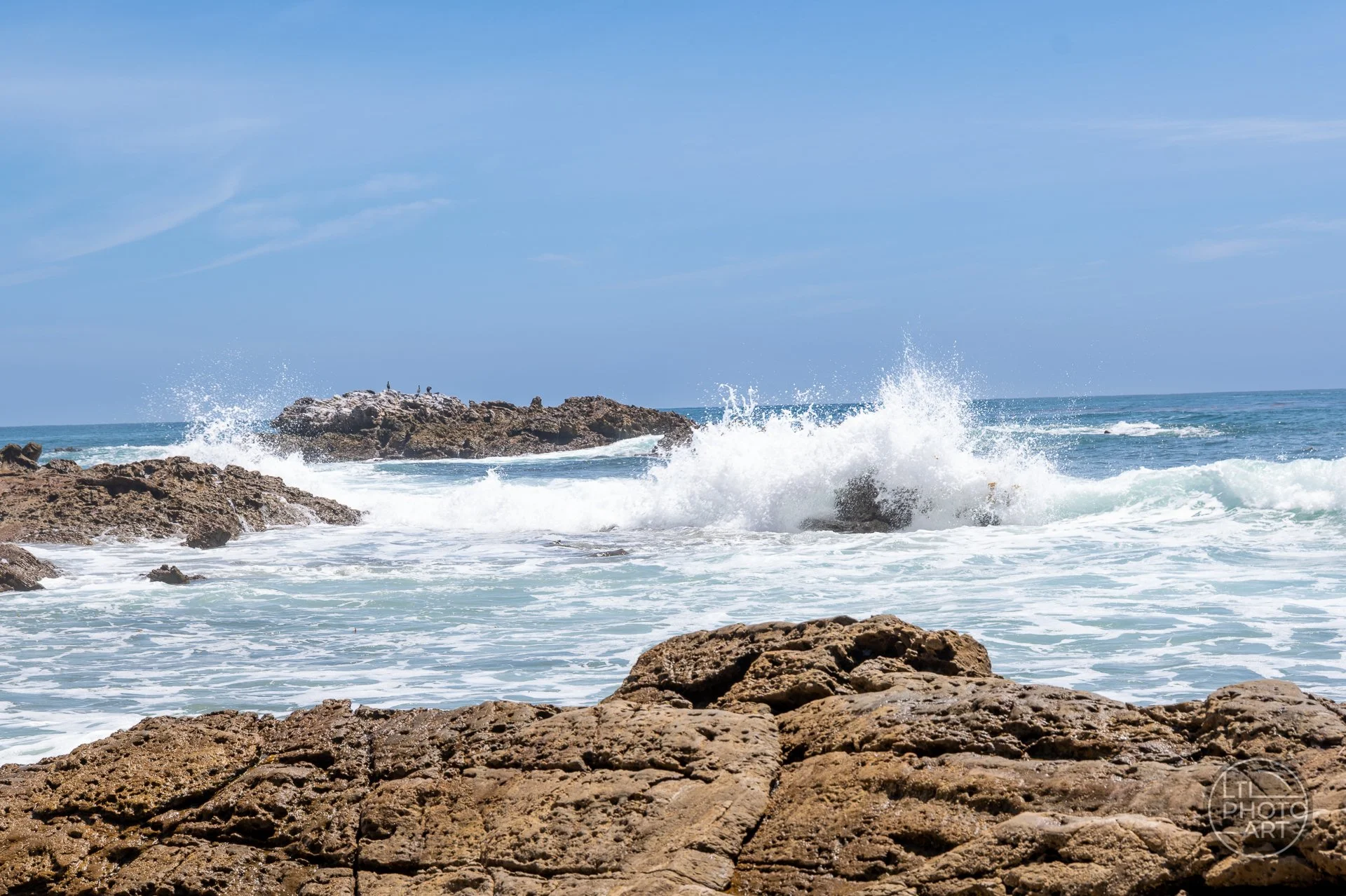
From sea level at Bird Rock, the rocks, waves, spray, and ocean movement create a more intimate and energetic coastal composition.
From this lower perspective, the coastline feels more immediate. Textures in the rocks become more pronounced, reflections emerge in wet surfaces, and the movement of waves adds energy to the composition. Birds and other coastal wildlife may contribute an additional layer of interest, giving photographers opportunities to capture the connection between the ocean and its natural inhabitants.
Working closer to the shoreline allows foreground elements to play a stronger role in the photograph. Tide pools, water patterns, rocks, and reflections can anchor the image while Bird Rock and the surrounding ocean complete the composition.
Timing is critical. Early morning and late afternoon light often provide the most flattering illumination, while longer exposures can reveal beautiful motion in the water. Changing tides constantly reshape the scene, creating new photographic possibilities throughout the day.
As always, safety comes first. Remain aware of incoming waves, slippery surfaces, and changing tide conditions. The goal is not simply to get closer, but to find a position where light, composition, and movement come together to create a stronger image
A Natural Classroom for Coastal Photography
Few locations in Southern California offer as many learning opportunities within such a compact area. Heisler Park serves as an outdoor classroom where photographers can practice composition, perspective, timing, exposure, and visual storytelling while working in a dynamic coastal environment.
The diversity of subjects encourages experimentation. In a single visit, you might photograph an expansive ocean vista, explore abstract patterns in tide pools, capture wildlife activity near the shoreline, or focus on the details of coastal plants and rock formations.
The park also teaches adaptability. Every visit is different. Tides reveal and conceal features. Waves create new foreground opportunities. Weather conditions influence mood and color. Unexpected moments involving birds, surfers, or passing visitors can add life and authenticity to an image.
These variables challenge photographers to observe more carefully, make thoughtful creative decisions, and move beyond simply documenting a beautiful location. The result is a deeper understanding of how light, composition, and timing work together to create memorable photographs.
Heisler Park is not simply a place to photograph. It is a place to learn how to see.
Laguna Beach Coastal Photography Workshop
Heisler Park, Monument Point, Bird Rock, and the surrounding Laguna Beach coastline form an important part of the Laguna Beach Coastal Photography Workshop.
During the workshop, participants explore locations like these while learning how to improve composition, exposure, perspective, timing, and visual storytelling in real-world coastal conditions. Rather than rushing from one scenic viewpoint to another, we focus on slowing down, studying the landscape, and learning how to create stronger, more intentional photographs.
Whether you are a beginning photographer looking to gain confidence with your camera or an experienced enthusiast seeking new creative insight, Laguna Beach provides an inspiring setting to grow your skills and strengthen your vision.