
Designing a Photo Adventure: Exploring the Eastern Sierra
Everyone has a different idea of what makes a photography adventure. For some, it means traveling to a single destination and spending several days photographing the same landscape under different lighting conditions. For others, it may involve hiking into remote locations in search of one particular composition.
For me, a photo adventure is about getting out, exploring new places, and dedicating several consecutive days to photography. It is an opportunity to break away from everyday routines, sharpen my photographic eye, and rediscover the excitement of finding a compelling composition.
For the past two years, I have made a point of setting aside time for these adventures. This year, fellow photographer John Hallam and I headed into California's Eastern Sierra for six days of landscape photography.
The adventure began long before we loaded our cameras into the vehicle.
The Most Important Decision Is to Go
The first step in planning a photo adventure is simply committing to making the trip.
My adventures generally range from four to ten days, depending on my schedule. During that time, photography becomes the primary objective. The itinerary is not designed around traditional sightseeing, leisurely meals, or spending several days relaxing at a resort.
Instead, the days are filled with exploring, composing, adjusting to changing light, and making photographs. Lots of photographs.
Sometimes a particular scene deserves thirty minutes or more as I experiment with different compositions, focal lengths, and camera settings. Other times, I may spend only a few minutes before moving on.
The objective is to keep looking, keep observing, and keep discovering what catches my eye.
Choosing the Destination
Once I commit to the adventure, the next decision is where to go.
This year, I wanted to explore the Eastern Sierra, a region offering an extraordinary diversity of landscapes. Within a relatively short distance, the scenery changes from high-desert valleys and rugged mountains to alpine lakes, forests, and dramatic granite peaks.
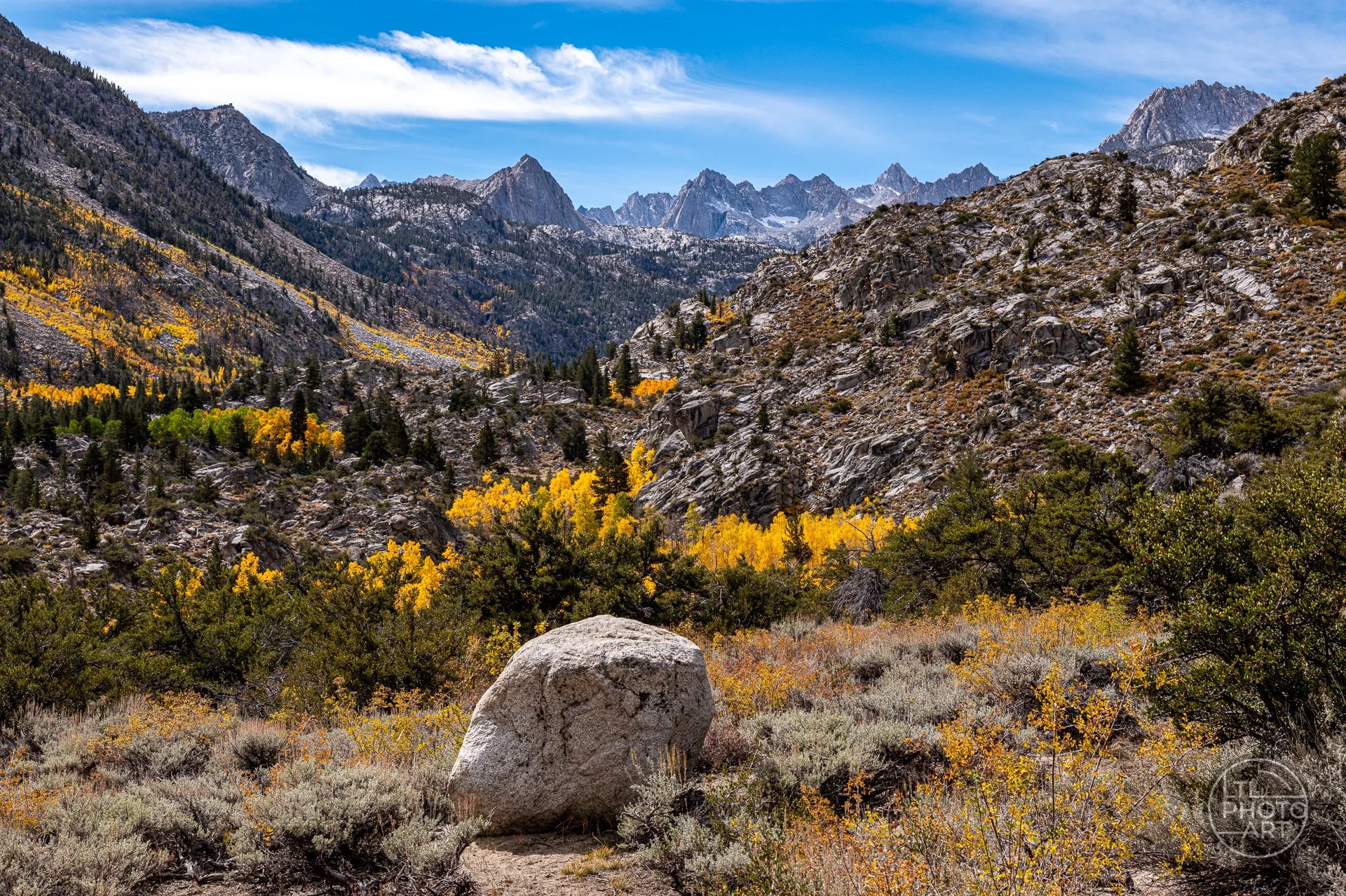
Autumn Colors Along Bishop Creek
That diversity was exactly what I wanted for this adventure.
My original plan was to spend ten days exploring the region. However, as the departure date approached, other commitments required me to shorten the trip to six days.
Rather than canceling the adventure, I adjusted the itinerary. There will always be competing demands on our schedules, and it is easy to find reasons to postpone a photography trip. Sometimes the better decision is to adapt the plan and go.
Building the Daily Shooting Plan
With the destination selected and the available days established, I begin researching potential shooting locations.
I use websites, maps, social media, and photographs from other photographers to identify interesting landscapes, possible compositions, and locations worth exploring.
I am not necessarily looking for photographs to replicate. Instead, I want to understand what a location offers and what opportunities might exist beyond the familiar viewpoints.
Once I identify the general areas I want to visit, I begin developing a daily shooting plan.
The first priorities, for me, are sunrise and sunset. These are often the most productive times for landscape photography, and I always look forward to seeing God's canvas painted across the sky in ways no photographer could ever fully predict.
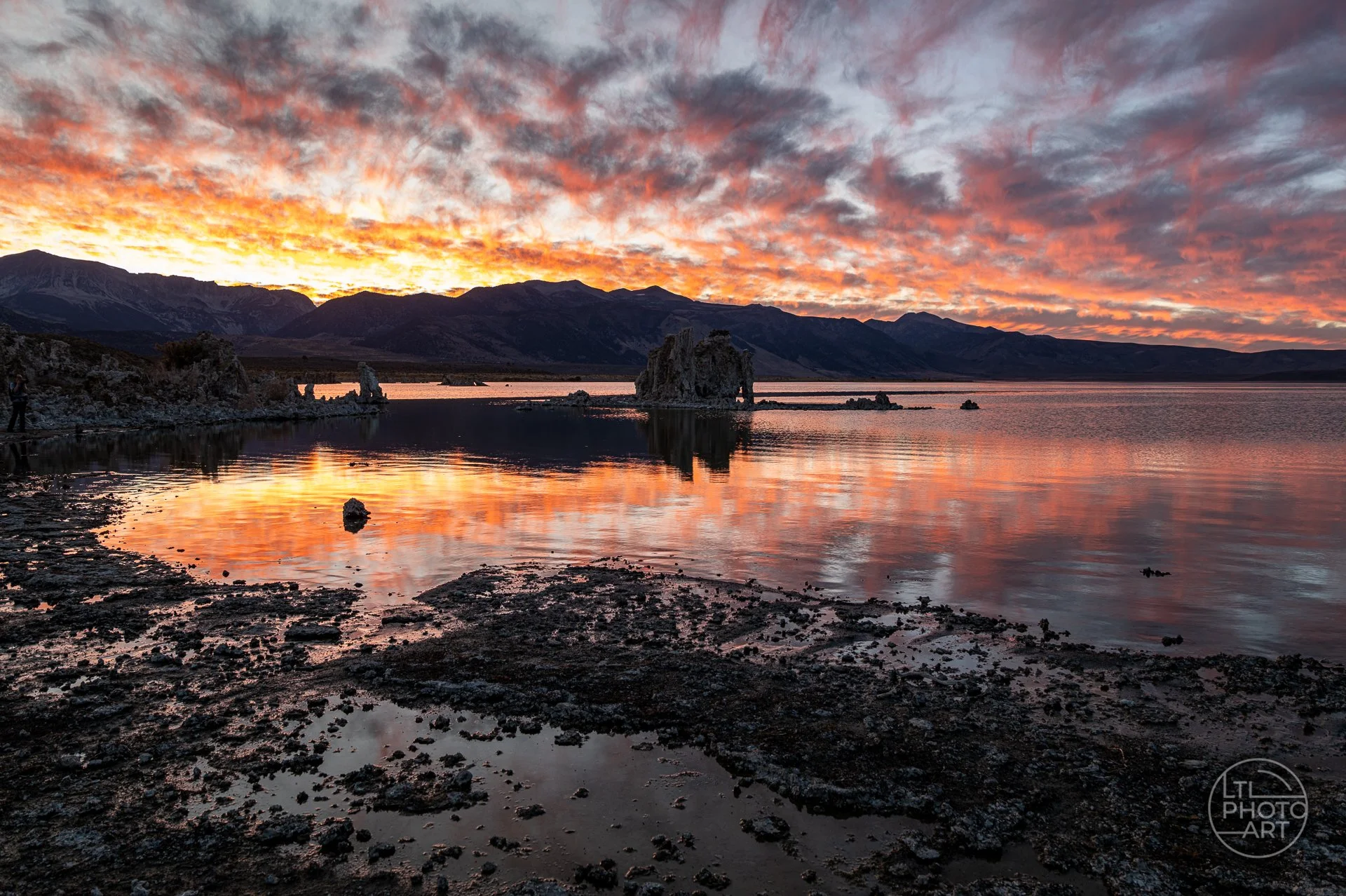
Sunset Reflections at Mono Lake
My planning begins with identifying where I want to be when the light is changing most dramatically. I research sunrise and sunset times, the direction of the light, and the surrounding terrain that might affect when sunlight reaches a particular location.
From there, I fill the remainder of each day with scenic drives, hikes, overlooks, and other potential shooting locations.
Because this is a photography adventure rather than a conventional vacation, I generally plan to move to a different area each day. Changing hotels is simply part of the process.
However, I never want the itinerary to become so rigid that I miss an interesting scene along the way. Some of my favorite photographs come from unexpected stops rather than locations identified during the planning process.
The shooting plan provides direction, but it should never replace the freedom to explore.
Selecting the Right Equipment
Researching potential locations also helps me decide what photographic equipment to bring.
Looking at photographs of an area gives me an idea of the types of compositions I might encounter. Will I be photographing broad mountain landscapes? Distant peaks? Details within a forest? Lakes with reflections? Or scenes that might be particularly compelling in black and white?
Since most of my photo adventures involve driving, I have the flexibility to bring additional equipment without worrying too much about weight or space.
I would rather have a lens available and not use it than find myself standing in front of a wonderful scene wishing I had brought it.
For adventures involving multiple locations and frequent stops, zoom lenses are generally my preference. They provide flexibility when the terrain makes changing positions difficult and reduce the need to change lenses in dusty or windy conditions.
I still bring selected prime lenses when I have particular compositions or photographic approaches in mind.
I also like to carry at least two camera bodies, allowing me to work with different focal lengths or photographic styles without constantly changing lenses. Whenever possible, one of those cameras is a monochrome camera.
There is something timeless about black-and-white landscape photography. Removing color changes how I see a scene, encouraging me to concentrate on light, contrast, shapes, textures, and tonal relationships.
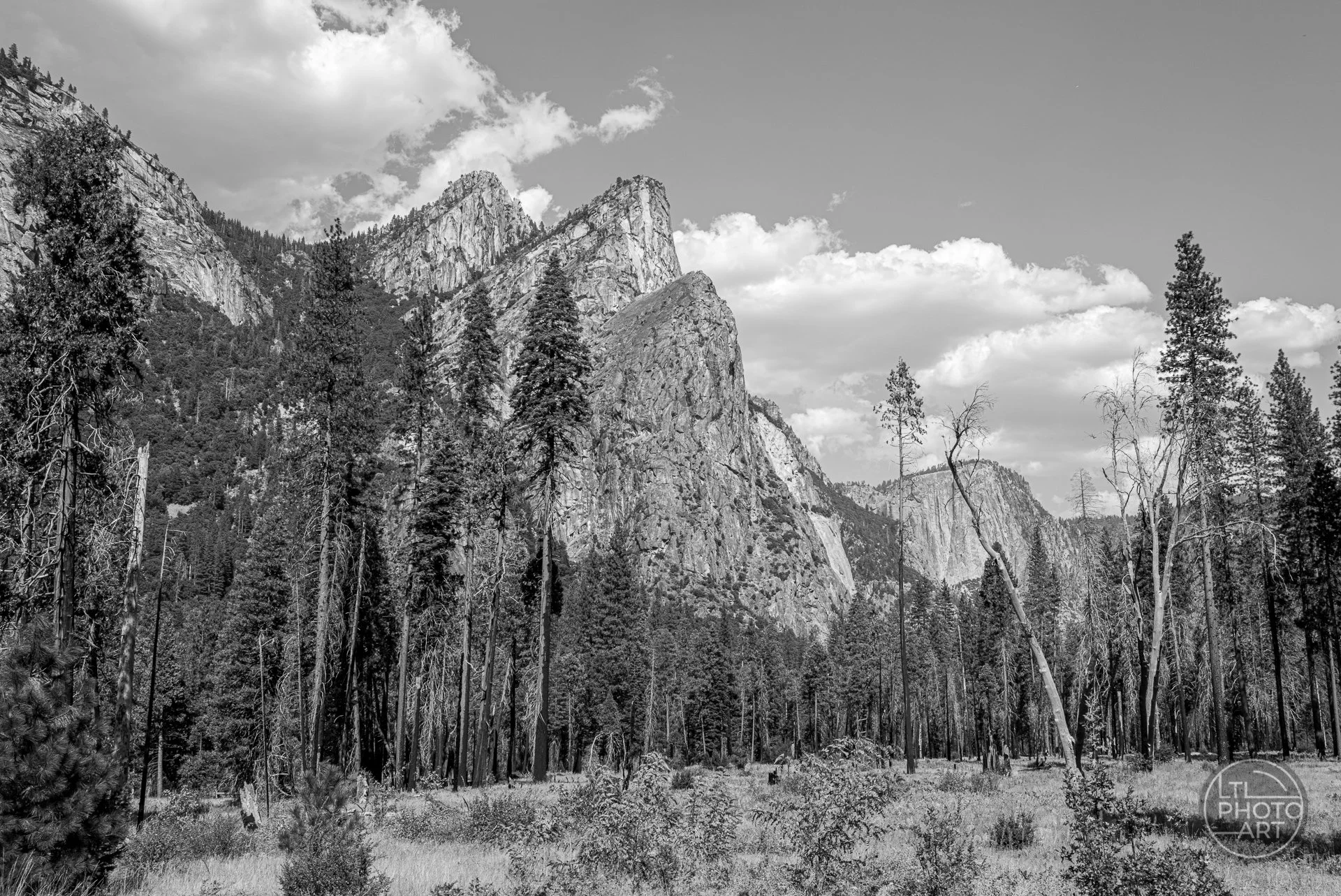
The Three Brothers - Yosemite
Some landscapes simply seem made for black and white.
Planning for the Light and Accepting the Weather
One of the greatest challenges in landscape photography is that we cannot control the conditions.
I can research the weather, anticipate the direction of the sun, and plan what time I want to reach a location. I can also prepare clothing for cold mornings, wind, rain, or changing temperatures.
But none of that guarantees the conditions I imagined.
The sky may be completely overcast when I was hoping for dramatic sunrise colors. The sun may disappear behind a mountain earlier than expected. A storm may force me to wait before continuing, particularly when working with a camera that offers less weather protection.
Even when the weather is favorable, the light may not fall exactly where I anticipated. That is where the creative process becomes particularly interesting.
When the sky is unremarkable, I may concentrate more on the foreground, patterns, textures, or details within the landscape. When the sun is in a difficult position, I look for trees, rocks, or other natural elements that might partially diffuse the light or create a more interesting composition.
Sometimes the best approach is to change lenses, change position, or rethink the photograph entirely. The conditions may not be what I wanted, but that does not mean there is nothing worth photographing.
In many ways, responding to those challenges is part of what makes a photography adventure rewarding.
The Convict Lake Experience
One of the best examples from our Eastern Sierra adventure occurred at Convict Lake, near Mammoth Lakes.
We planned to photograph the lake at sunrise, which meant arriving well before daylight.
It was pitch dark when we reached the location. Using headlamps, we found a place along the shoreline, set up our cameras, and prepared for the morning light.
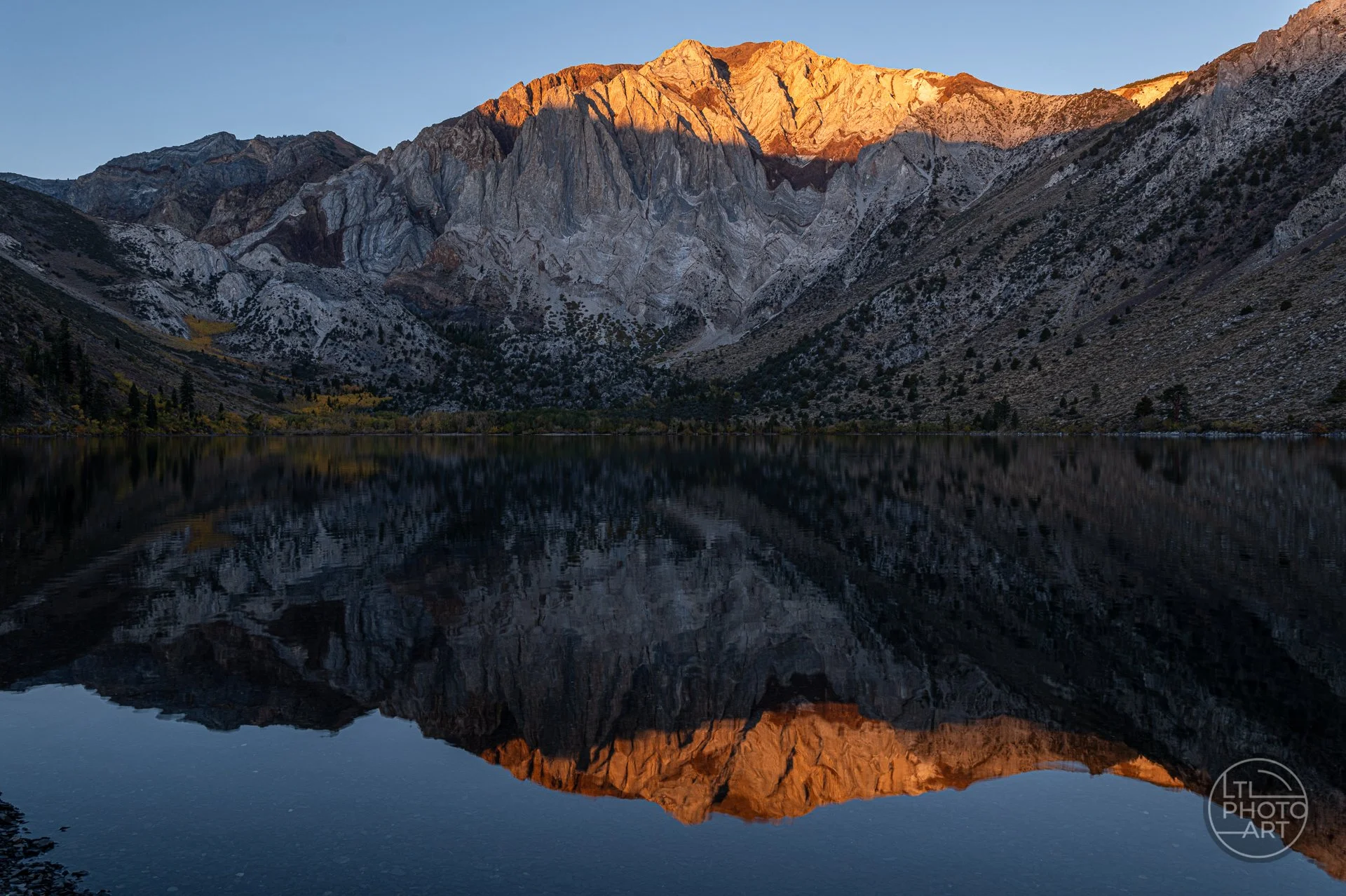
First Light at Convict Lake
Of course, there was one question running through my mind: Am I in the best spot?
When you arrive at an unfamiliar landscape in complete darkness, it is difficult to know whether you have selected the strongest possible composition. You can study maps and photographs in advance, but nothing replaces actually seeing the landscape.
As the light developed, we discovered that our selected location worked extremely well. We had an excellent view of the lake and surrounding mountains, and we were able to make photographs as the morning unfolded.
Later, after the sun had risen, we began walking and exploring other areas around the lake.
That was when we discovered several additional viewpoints and compositions that would have been interesting to photograph in the early morning light.
Had we planned to stay in the Mammoth Lakes area for another day or two, we might have returned the following morning to explore those possibilities.
But that wasn't our plan. Our next destination was the June Lake area, so I made a mental note: Convict Lake deserves another visit.
That experience captures both the advantage and the limitation of my approach to photo adventures.
I may not discover every composition or photograph every location under its ideal conditions. But I get to explore a much wider variety of landscapes, and each adventure helps me identify places worth revisiting.
I am comfortable with that trade-off.
Traveling with a Photography Partner
One aspect of this adventure that made it particularly enjoyable was sharing it with fellow photographer John Hallam.
People often assume that two photographers standing side by side will come home with identical photographs. In my experience, that rarely happens. Even when looking at the same landscape, we often notice different things. One photographer may be drawn to the grand scenery, while another focuses on the details. A wide-angle composition that appeals to one person may inspire a telephoto image for someone else.
Throughout our Eastern Sierra adventure, John and I frequently compared compositions, discussed changing light, and shared ideas about potential shooting locations. Sometimes those conversations confirmed what I was already seeing. Other times they encouraged me to explore a different angle, focal length, or entirely different composition.
Traveling with another photographer also provides practical advantages. During long photography days, there are countless decisions involving routes, timing, weather, and where to be for sunrise or sunset. Having another set of eyes often leads to better decisions and helps us recognize opportunities we might otherwise overlook.
Perhaps most importantly, sharing the experience makes the adventure more enjoyable. Photography is often a solitary pursuit, but there is something rewarding about watching a friend experience the same sunrise or discover a composition that excites them. Even after years of carrying a camera, I continue learning from other photographers. The photographs are what we bring home, but the conversations and shared experiences often become just as memorable.
Knowing When to Move On
One of the most important decisions during these adventures is knowing when to continue exploring a location and when to move on.
There is almost always another composition to discover. A short walk might reveal a different foreground, a new perspective, or a better relationship between the landscape's elements. Changing the focal length can transform the scene. Waiting another fifteen minutes may produce more interesting light. Those possibilities are part of the attraction of landscape photography.
But with multiple destinations scheduled over a relatively short period, I also have to recognize when it is time to leave.
That does not mean rushing through a location. I still take the time necessary to work a promising composition and experiment with different approaches. Sometimes that means setting up a tripod and experimenting with slower shutter speeds to capture the movement of water flowing through a creek.
It means accepting that I cannot photograph everything.
When I discover an area deserving more attention, I make a note of the location, the time of day, or the season when I would like to return.
In that sense, every photo adventure becomes reconnaissance for another.
The Reality of Long Photography Days
There is another side to these adventures that is easy to overlook: the days can be very long.
Depending on the distance to the sunrise location, we may be up several hours before daylight. After photographing sunrise, the day continues with hiking, driving, scouting, and photographing additional locations.
Then comes sunset, often followed by a drive to the next hotel. By the time we finish for the evening, there may be very little time before preparing to do it all again.
However, I try to maintain a consistent routine at the end of each day. I download and back up my photographs, recharge batteries, check my equipment, and clean lenses when necessary. I also take a quick look through the day's images.
This is not the time for extensive editing.
Instead, the review gives me an opportunity to reflect on what I photographed, identify any technical issues, and recognize whether I need to make adjustments the following day. Dust spots, exposure decisions, or a dirty sensor are much better discovered during the trip than after returning home.
Spending hours editing photographs late into the evening can make the next early-morning departure particularly difficult.
My preference is to concentrate on capturing the images during the adventure and save the detailed editing for when I return home.
Bringing Home More Than Photographs
I recognize that my approach to photography adventures is not for everyone.
Some photographers prefer to spend several days in one location, learning the landscape, studying the light, and returning repeatedly until the conditions align with a particular vision.
There is tremendous value in that approach, and I certainly understand its appeal.
My adventures have a different objective.
I want to explore. I want to experience changing landscapes, discover unfamiliar locations, and challenge myself to recognize compositions quickly. I want to come home with a diverse collection of photographs that reflects the places I visited and how I interpreted them.
Not every location will produce a favorite photograph. Not every sunrise will be spectacular. And I will undoubtedly leave some places wishing I had another day.
But the experience of being out there, concentrating on photography from early morning until evening, is rewarding in itself.
Each adventure strengthens my ability to see, compose, and respond to the conditions in front of me. And each one adds another list of places I would like to revisit.
Along the way, I am continually reminded that some of the most memorable moments occur when we simply pause to appreciate the beauty of God's creation unfolding before us.
The objective is not to photograph everything. It is to keep exploring, keep learning, and, most importantly, make the time to go.
Eastern Sierra Photo Adventure Collection
Our six-day journey through California's Eastern Sierra provided an extraordinary range of photographic opportunities, from desert landscapes and alpine lakes to autumn forests and the granite formations of Yosemite. My Eastern Sierra Photo Adventure Collection features selected photographs that capture the diverse landscapes, changing light, and memorable moments we discovered along the way.